

I stop, inhale the fresh air, and enjoy the view. I let the stunning lake landscapes of Punkaharju take over me. I continue my walk along a narrow sand isthmus, a ridge where the pines rise to great heights. On both sides of the ridge called Punkaharju, blue lakes sparkle, reflecting the white clouds slowly drifting in the sky.
The forest smells intoxicatingly fresh. The beauty of Punkaharju is palpable. This natural wonder was created by the last ice age thousands of years ago.
The experience is crowned by my historical accommodation, the wooden Hotel Punkaharju. The pastel pink hotel, adorned with beautiful wood carvings, is like a time travel to the 19th century when Punkaharju became a famous attraction.
At breakfast, the large windows of the dining room open to the forest and lake along the ridge. It feels like being in a historical period drama. The idyll is perfect. This is Finnish Lakeland at its most beautiful.
Geography of Finnish Lakeland
You’ve surely heard that Finland has thousands of lakes. 187,888, to be exact. Yes, you read it right, almost two hundred thousand lakes. It doesn’t make any sense, but that’s how it is. Believe it or not.
Lakes are everywhere. Sometimes there are only narrow and elongated, steep-sided strips of land, called ridges, between the lakes. We have the last ice age to thank for the astonishing landscapes of Finnish Lakeland. Finland is a land shaped by the ice age.
The largest lake, at least on paper, is Saimaa, though it is so jagged in shape that hardly any Finn knows where Saimaa begins and ends. In a way, Saimaa consists of several interconnected lakes, each with its own name.
The core area of Saimaa is around Lappeenranta and Savonlinna, but the so-called Greater Saimaa extends much further, all the way to Joensuu.
It doesn’t really matter whether you’re on the shores of Saimaa or some other lake – it’s guaranteed to be beautiful everywhere. Finland is a poem of lakes.
Best Cities of Finnish Lakeland
Finnish Lakeland covers a vast area, starting from in front of Tampere, Finland’s second-largest city in the middle part of Finland, and extending to the Eastern border.
Tampere is a good destination if you want to combine lake landscapes with vibrant urban culture. Lakes surround the city on all sides.
However, it’s not a large city by global standards. Tampere has just over 200,000 inhabitants. The atmosphere is pleasantly small-town-like, and you can walk everywhere. Tampere is best known for its beautiful old industrial areas which red brick buildings blend perfectly to the cityscape.
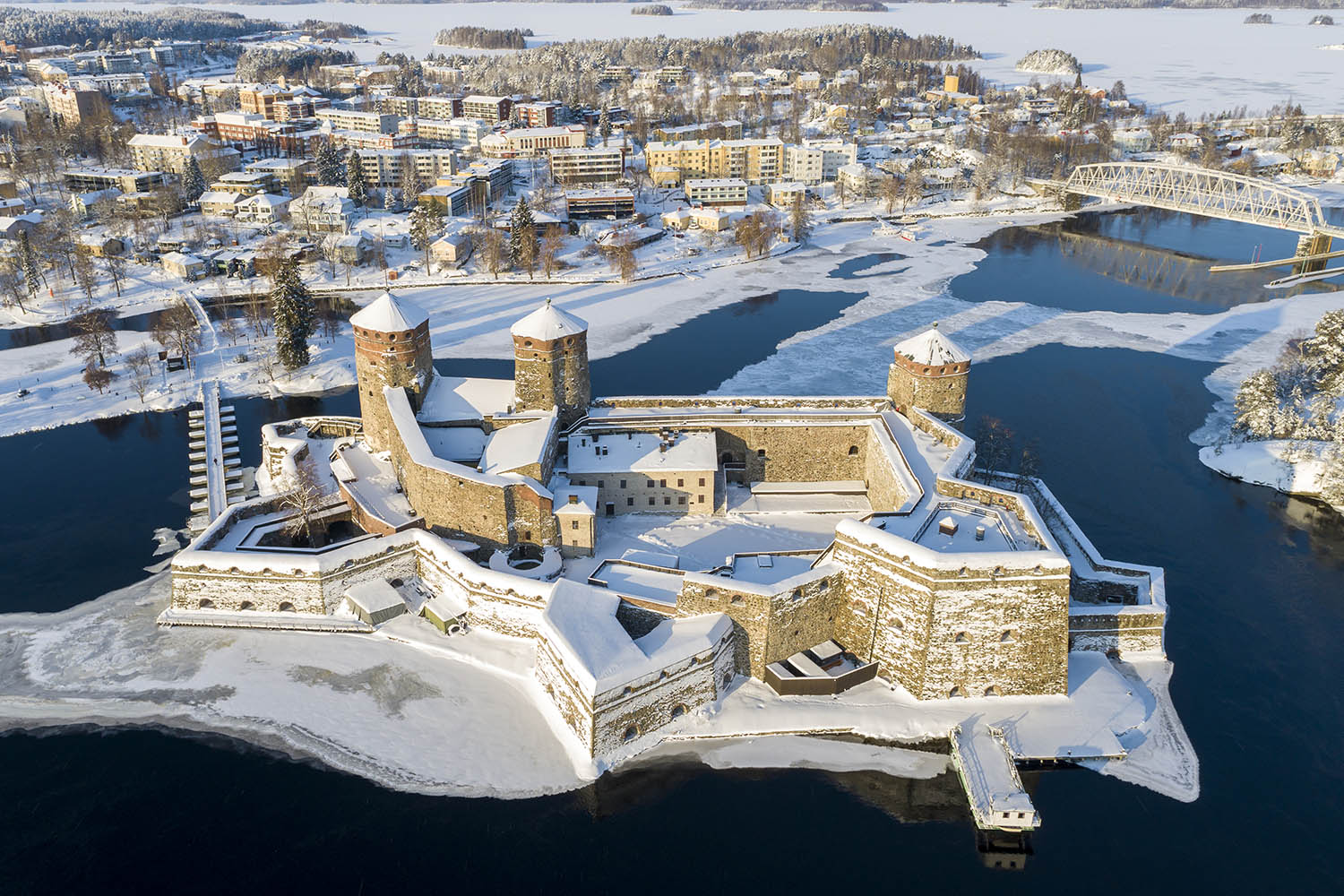
Other central cities in Finnish Lakeland include Jyväskylä, known for Alvar Aalto’s architecture, and the tiny Savonlinna, adorned with a medieval castle and located in the landscapes of Finland’s largest lake, Saimaa.
Sights of Finnish Lakeland

Finnish Lakeland is not only rich in landscapes but also in attractions. Here you can find ancient rock paintings, medieval castles, and mystical wooden churches.
There are two UNESCO World Heritage Sites in Finnish Lakeland: the old church of Petäjävesi near Jyväskylä and the Oravivuori triangulation tower, part of the Struve Geodetic Arc.
In the same direction is perhaps the most peculiar sight in Finnish Lakeland, the Toivakka Church, decorated with truly psychedelic, hippie-style wall paintings. There are certainly no similar church paintings anywhere else in the world.
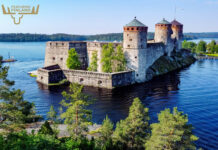
There are also plenty of attractions in Savonlinna. On an island right in front of the city center is the beautiful Olavinlinna Castle. In July, the castle serves as the venue for the prestigious Savonlinna Opera Festival.
A short drive from Savonlinna is the Kerimäki Church. The world’s largest wooden church is almost mind-blowingly massive. It remains a mystery of history why such a magnificent church was built in such a remote rural village. It’s worth a visit to marvel at it.
One of Finnish Lakeland’s most famous natural wonders is the picturesque Punkaharju, a narrow sandy ridge left behind by the ice age, winding through the lake. Punkaharju was one of Finland’s first tourist attractions and was visited by people from abroad as early as the 19th century.
Another great natural attraction is the magnificent Imatrankoski Rapids, which have been admired by the likes of Empress Catherine the Great of Russia, composer Richard Wagner, and Alexandre Dumas, the author of The Three Musketeers. The long history of Imatrankoski as a tourist destination is reminded by the most beautiful hotel in Finland, the art nouveau-style Imatra State Hotel, located next to the rapids.
Near Imatra, it’s also worth stopping to see Kummakivi, a large glacial erratic left behind by the ice age. The massive rock appears to be precariously balancing on another, as if it could topple at any moment. But there it has balanced for thousands of years.
For those interested in ancient history, a great sight is the Astuvansalmi rock paintings, the largest of their kind in the Nordic countries. The ochre-painted elk, boats, horned shamans, and handprints tell stories from 5000 years ago. As a bonus, you get the stunning lake landscapes of Saimaa.
Natural Wonders in Finnish Lakeland
Finnish Lakeland is full of beautiful nature, and there are several national parks. Many of them are particularly suitable for day hikes. If you crave truly untouched nature and want to see large predators like bears and wolves, it’s worth traveling a bit further to Eastern Finland.
A nice day hike destination is Helvetinjärvi National Park near Tampere, whose attraction is not diminished by its devilish name which translates as Hellish Lake. The park’s highlight is a rocky canyon, Helvetinkolu aka Hell’s Canyon, which you can climb up or down.
North of Jyväskylä is Pyhä-Häkki National Park, a lovely ancient forest where you can hug trees that are up to 500 years old.
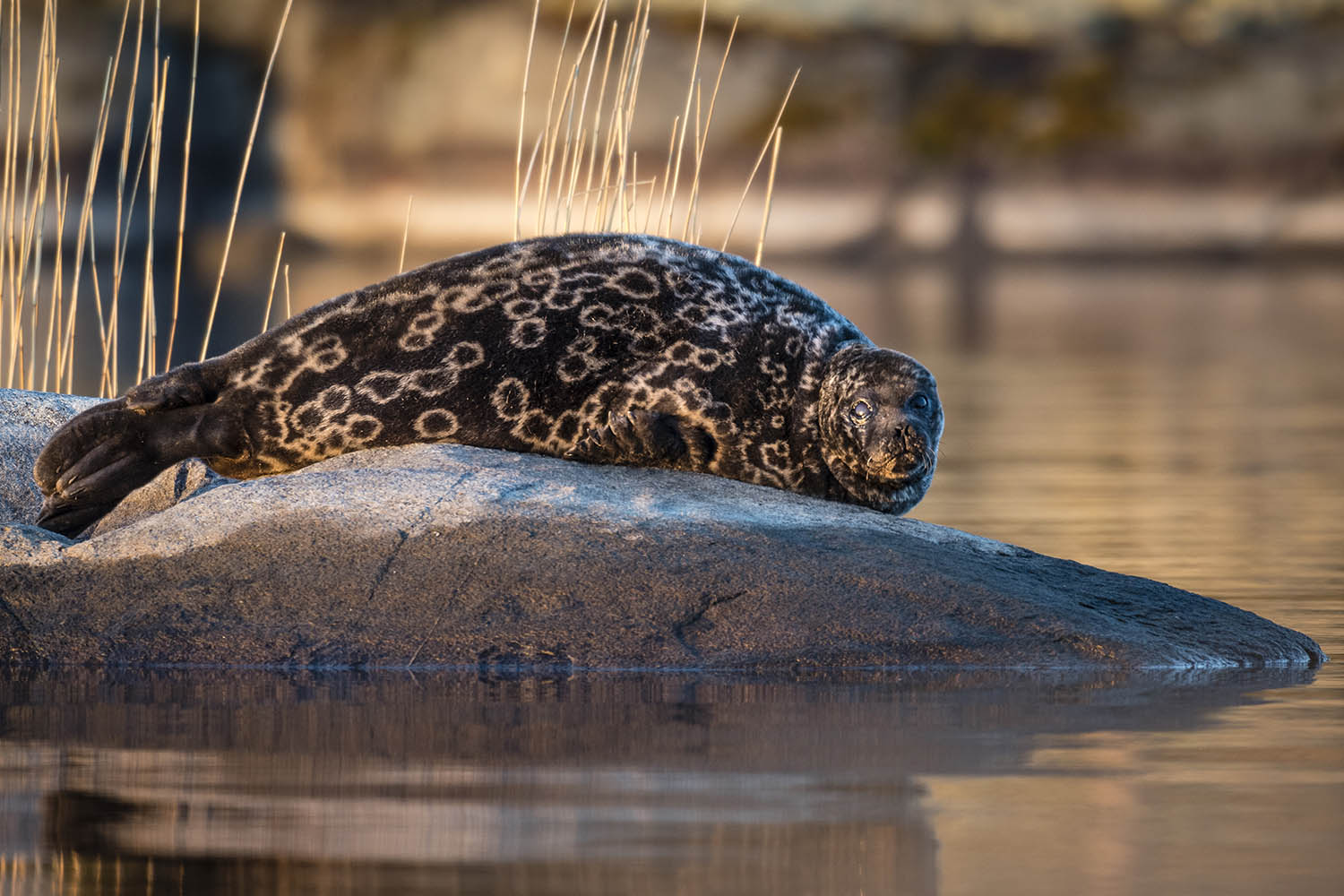
If you’re interested in spotting exotic animals, the endangered Saimaa ringed seal lives in Saimaa, Finland’s largest lake. You can try to spot it on a kayak trip to Kolovesi National Park. Even if the shy seal remains unseen, the rocky lake landscapes of Kolovesi are an experience in themselves.
Lake Cruise from Savonlinna to Kuopio
A great way to experience Finnish lake scenery at its best is to join a day cruise. The most famous of the cruise routes is the Heinävesi route, which takes a day and runs from Savonlinna to Kuopio, another nice small town in the lake landscapes. At least Finns are used to calling it the world’s most beautiful inland water cruise.
By Car or Bike in Finnish Lakeland
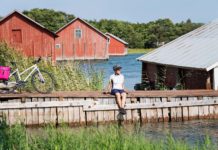
In addition to a boat, you can also explore the lake landscapes excellently by car – or by bike. There are many competitors for the title of Finland’s most beautiful road, but one of the strongest candidates is the trunk road 62 from Mikkeli to Puumala, also known as the Lietvesi scenic road. The distance is short enough to be well-suited for cycling.
The road winds through Finland’s most stunning lake landscapes, across the lake and over bridges and narrow sandy ridges that run between the lakes. Lakes sparkle blue everywhere around. You often feel like stopping to take photos.
Spa Holiday in Finnish Lakeland
Finnish Lakeland has several wonderful spas. The most memorable of these is Spa Resort Järvisydän on the shores of Saimaa, whose unique architecture blends beautifully with the lake nature.
Another popular spa destination is Imatra, famous for its magnificent rapids, where there are two large spa hotels, the more traditional Imatra Spa and the more modern Holiday Club Saimaa.
Rent a summer cottage by the lake
An essential part of Finnish life is a summer cottage by the lake. People go there to spend their weekends and summer holidays in peace – and solitude. Nowadays, it’s easy for tourists to rent a cottage for a few days or even longer. It’s worth trying – it’s the most authentic way to taste Finnish life for a moment. Lakeside hotels are an easy alternative, and there are plenty of them.
Cottage life essentially includes a sauna, where you cool off by dipping into the lake. And yes, it’s perfectly safe to swim in Finnish lakes. Although the water is not often very clear, that’s just part of it. The water is clean and usually also drinkable.
An excellent area for renting a cottage in Finnish Lakeland is Mikkeli, which has long been one of Finland’s most popular cottage destinations.
Read more about cottage life in Finland.
The Best Time to Travel to Finnish Lakeland
Finnish Lakeland is at its most popular in summer, but you can also travel in winter.
In winter, a particularly fine destination is Spa Resort Järvisydän in Rantasalmi, where a tour skating track starts from the shore. The route leads to the protected Linnansaari National Park. In addition to the stunning winter landscapes, you might even spot the endangered Saimaa ringed seal while skating!
How to Travel to Finnish Lakeland
There are several airports in the Finnish Lakeland area. Ryanair flies to both Lappeenranta and Tampere airports.
It is also easy to travel to Finnish Lakeland via the capital, Helsinki. There are good train and bus connections to various parts of the region.
You can manage with public transportation if you plan to stay and move mainly in cities. If you plan to rent a cottage or travel more extensively in Finnish Lakeland, it is worth renting a car. An adventurous option is to tour Finnish Lakeland by bike.
Read more about driving a car in Finland.
Did you like this article? If you’re planning a trip to Finland, please book your hotel or rent a cabin or rental car by clicking on our affiliate links. We get a small commission, but you don’t pay any extra. Thanks for your support!