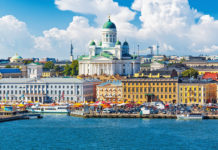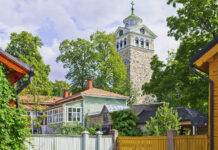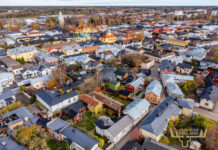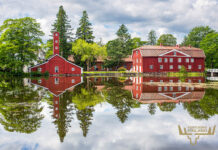

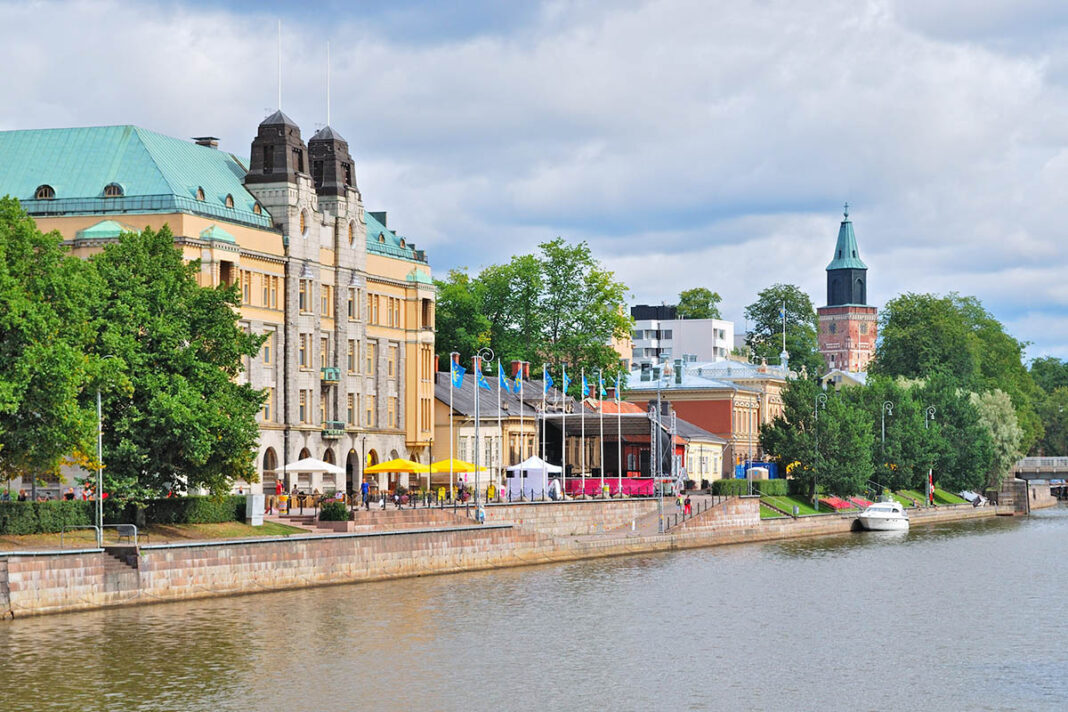
Turku may be Finland’s oldest city, but it just might be the country’s youngest at heart. This small big city bursts with an unexpectedly joyful, international vibe, something distinctly… European. And the locals? They carry a deep-rooted hometown pride that feels more Italian than Finnish.
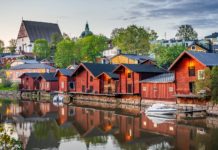
At the heart of Turku flows the Aura River, winding its way through some of the most beautiful urban scenery in Finland. The stretch between the Cathedral Bridge and Auran Bridge is a postcard come to life. Along the riverbanks, you’ll find neighborhoods packed with charming cafés, quirky restaurants, and independent boutiques, like a mini metropolis, but one where everything is within walking distance. You wouldn’t be exaggerating if you called Turku Finland’s most delightful city.
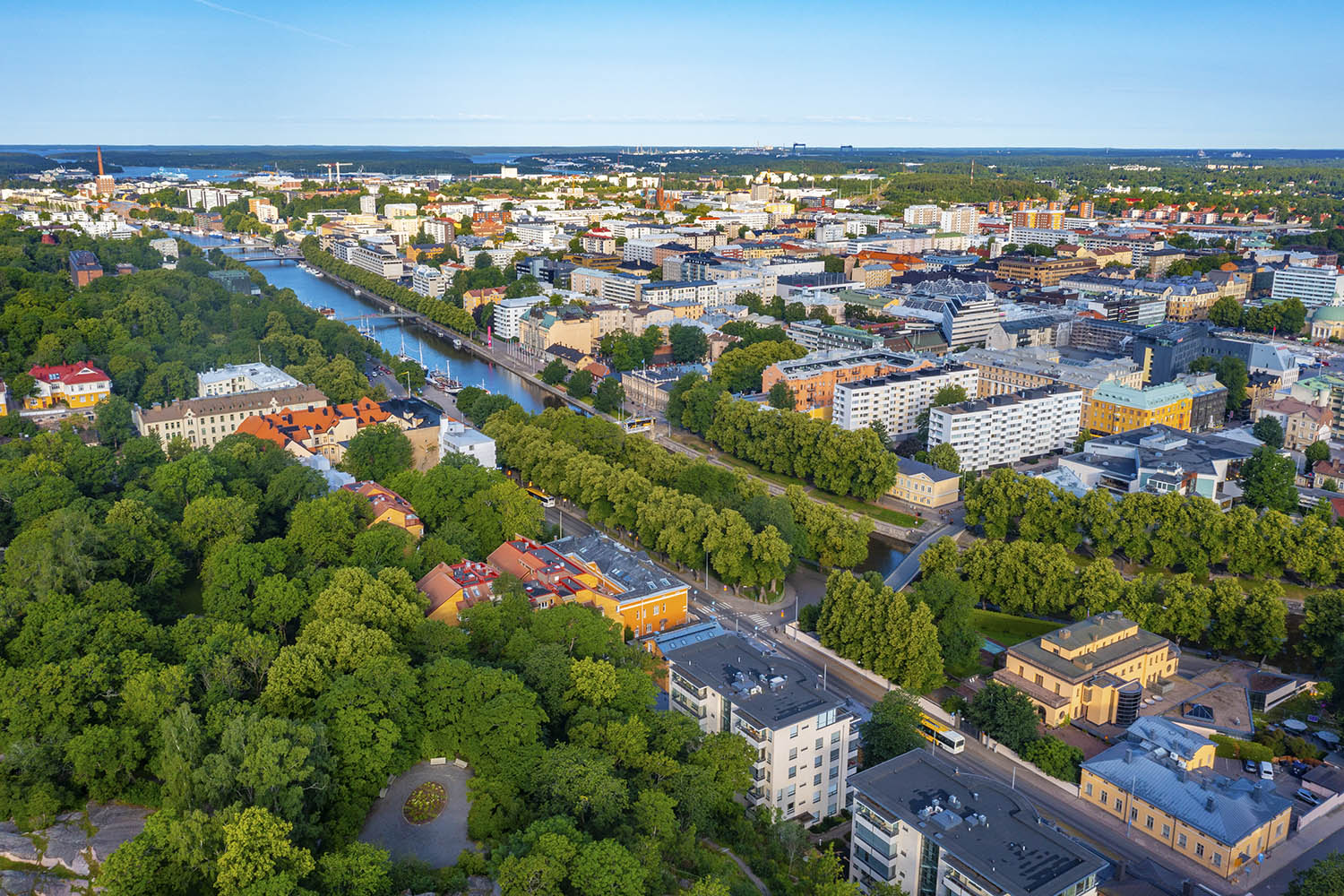
No other city in Finland rivals Turku’s grand, storied past. In medieval times, it was the second-largest city in the Swedish kingdom, and life inside Turku Castle was like something out of a fantasy novel, full of feasts and schemes behind stone walls. The castle was the most important in Finland, and Turku Cathedral wasn’t just any church , it was the cathedral, a sacred cornerstone of Finnish history.
So you can imagine the shock when, in 1812, Russian Tsar Alexander I snatched the capital status from Turku and handed it to Helsinki.
Still, the Turku region has plenty more to offer. In nearby Paimio, you can visit architect Alvar Aalto’s masterful tuberculosis sanatorium. And just a short drive away in Naantali, discover a picture-perfect old wooden town and every child’s favorite theme park: Moominworld.
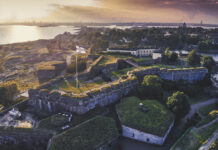
Turku Castle — Finland’s most important castle (and it knows it)
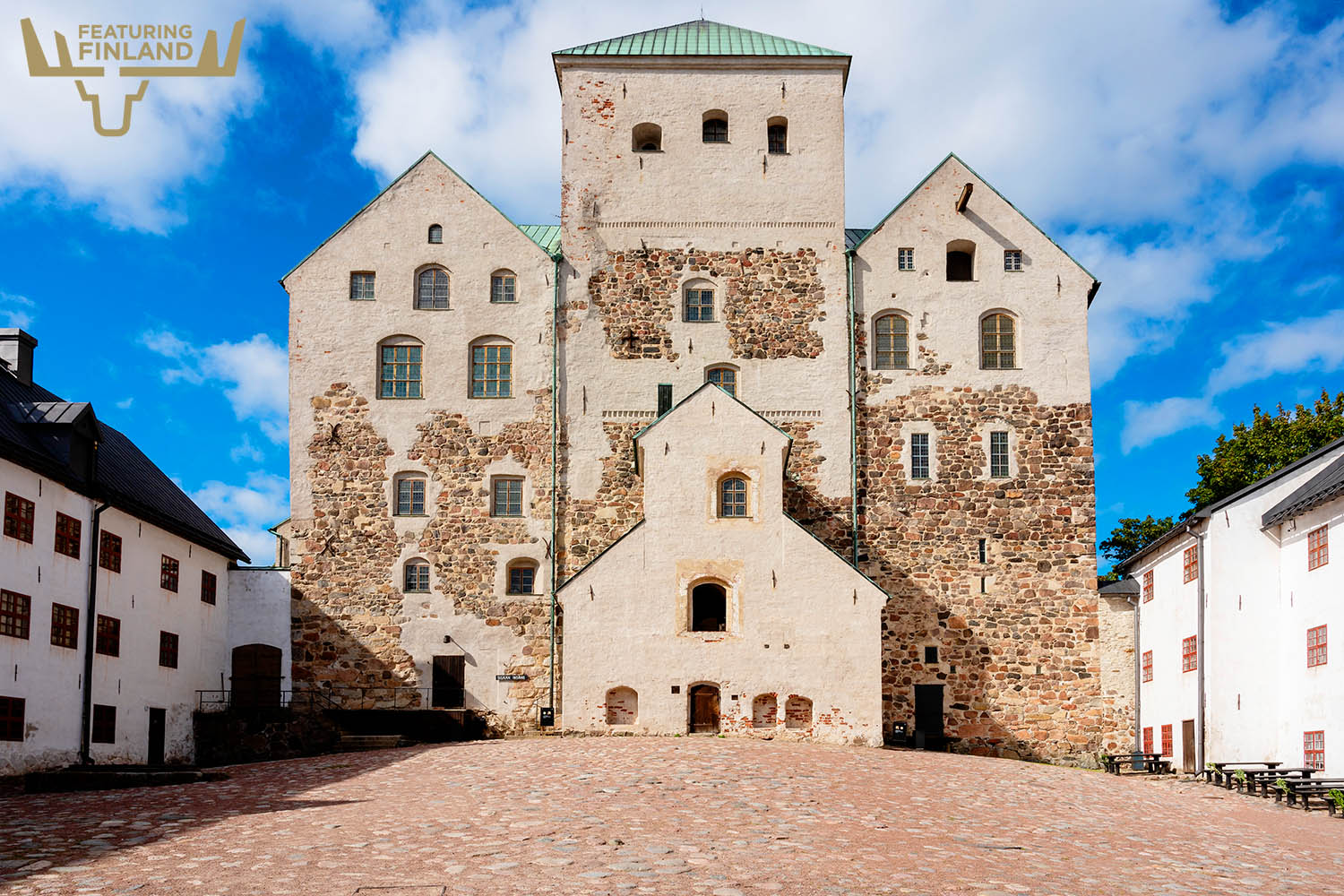
Right on the edge of the city center stands Turku Castle, founded in the late 1200s. Over the centuries, it’s hosted noble banquets, withstood brutal battles, and even housed imprisoned royals. This isn’t just any castle , it’s Finland’s most important one, and one of the most iconic fortresses in all of the Nordics.
Back in the late 1500s, Turku wasn’t some sleepy provincial town. It was the second-biggest city in the Swedish empire, boasting a population of 2,000 , a pretty big deal compared to Stockholm’s 7,000. The golden age of the castle was during the reign of Duke John of Finland, who held court there in full Renaissance splendor. Think tapestries, velvet robes, and dining with forks (a Finnish first). They even wore pajamas. Yes, fashion mattered , day and night.
The castle’s exhibition is top-notch, with everything from detailed scale models to videos and live actors. You might even stumble upon the royal toilet tucked into the great hall wall , proof that even monarchs had to go. Set aside a few hours to explore properly. And good news: entry to the castle courtyard is free. Even better news? No one will throw you in the dungeon. Probably.
Turku Cathedral — where Finland touches the sky
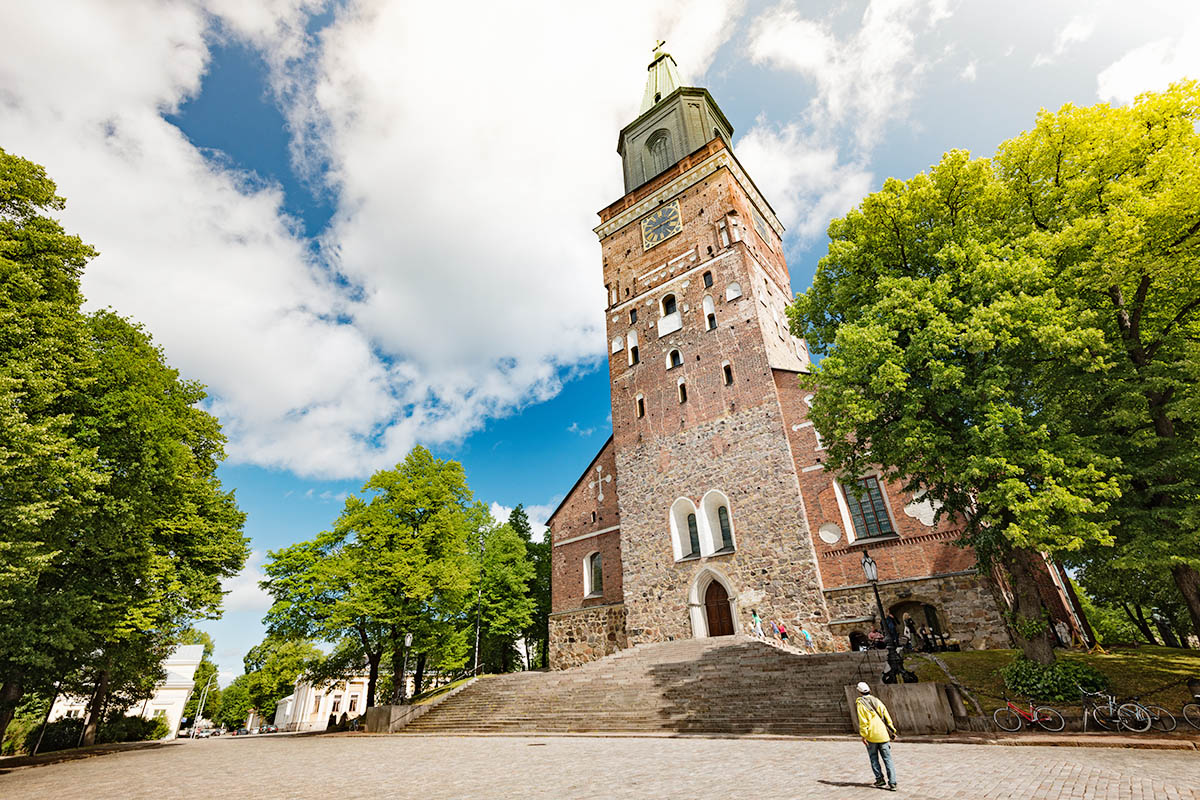
In the very heart of the city stands Turku Cathedral , Finland’s national shrine and the country’s only genuine Gothic-style cathedral. Its soaring vaulted ceiling seems to brush the heavens, a sight that must have left 15th-century Finns absolutely speechless (and probably a little dizzy).
Step inside, and you’ll find more than just silence and stained glass. The cathedral’s crypts are especially atmospheric, home to some of Finland’s most legendary figures. Among them lies the imposing black coffin of Karin Månsdotter , a peasant girl who became Queen of Sweden… for a whole 87 days. Her marriage to King Erik XIV was the scandal of the century and helped get the king dethroned, imprisoned, and eventually , in true royal fashion , poisoned by his brother. Sibling rivalry: 16th-century edition.
Karin, Erik, and their children were locked away for nine years. After Erik’s death, she was released but never reunited with her sons. One died young; the other was exiled. And yet, Karin lived on , 35 more years in a remote Finnish manor, far from the Swedish court that cast her aside. While Sweden forgot her, Finland never did. To this day, she remains our very own unofficial queen , crown, heartbreak, and all.
Sibelius Museum — a symphony of sound, concrete, and Finnish pride
Just a short stroll from the cathedral, Piispankatu awaits one of Turku’s most charming streets, lined with wooden houses that look like they’ve stepped straight out of a storybook. But nestled among them is something quite different: the bold, brutalist Sibelius Museum.
Inside, the museum hits two high notes. One half is dedicated to Jean Sibelius, Finland’s national composer and proud provider of emotional orchestral vibes. The other showcases an impressive instrument collection from across the globe , from ancient flutes to things you didn’t even know could be played.
The building itself is a standout. Designed by Woldemar Baeckman, it’s a concrete masterpiece that’s all sharp angles and quiet strength. The main concert hall feels like a stylish bunker built for Beethoven, and yes, it sounds as dramatic as it looks. Come for the history, stay for the acoustics. Just maybe don’t hum too loudly.
Ett Hem — step into an elegant past
Just across from the Sibelius Museum sits Ett Hem, a name that means “a home” in Swedish , and this one belongs to the upper crust of 1900s Finland. This beautifully preserved house museum gives you a glimpse into the life and interior style of a well-to-do bourgeois family at the turn of the century.
The rooms are styled in everything from Baroque to Gustavian, Biedermeier to Jugend, creating a rich tapestry of old-world taste. Alongside the furniture are original artworks and objects by some of Finland’s most beloved artists, including Helene Schjerfbeck, Albert Edelfelt, and Akseli Gallen-Kallela. It’s the kind of place where you’ll want to straighten your posture and pretend you own fine china , even if your idea of “fancy” is two kinds of oat milk.
Luostarinmäki — the fire that spared a neighborhood’
When the Great Fire of Turku tore through the city in 1827 , the most devastating urban fire in Nordic history , it left 11,000 people homeless and erased most of the old center. But one small quarter survived: Luostarinmäki.
This unique outdoor museum isn’t a reconstruction. The wooden houses here are original, built between 1780 and 1820, and they haven’t budged an inch. That’s what makes Luostarinmäki so special , it’s an untouched time capsule of what Finnish cities actually looked like centuries ago.
Inside these preserved homes and workshops, you’ll find the lives of craftspeople brought back to life , from cobblers to bookbinders, all under one roof (or several dozen). It’s history you can walk through , no time machine required, just sturdy shoes.
Kaskis — the best restaurant in Turku
After exploring the artisan charm of Luostarinmäki, you’ve earned yourself a treat , and Kaskis delivers. Just around the corner on Kaskenkatu 6 A, this cozy yet refined spot has consistently been voted Turku’s top restaurant and ranks among the best in all of Finland.
Kaskis keeps things relaxed: no white tablecloths or whispered menus here. But don’t let the laid-back vibe fool you , every dish is crafted with serious skill. The ingredients are local, the plating is elegant, and while the descriptions might sound simple, the flavors are anything but. It’s fine dining without the fuss (and with surprisingly fair prices, considering the quality).
The restaurant sits on Kaskenkatu, one of Turku’s grandest streets, sloping steeply toward the Aura River. Cross the river on a beautiful Art Nouveau bridge, and you’ll find yourself heading right toward the Turku Art Museum. But for now? Settle in, raise a glass, and enjoy one of Finland’s finest meals , just steps from history.
CaféArt — Turku’s most beloved café
Right on the banks of the Aura River sits CaféArt , Turku’s most famous café, and for good reason. With multiple cozy rooms, you’d think there’d always be space, but somehow it’s almost always packed. Still, it never feels rushed. The vibe is effortlessly inviting, like the kind of place where the furniture just happened to fall into place… perfectly.
This is a true family-run gem, where coffee is treated with reverence and customers with warmth. The beans come from the family’s own Turun Kahvipaahtimo roastery just outside the city, roasted exactly one week before serving (because that’s how it should be), and ground fresh for each cup.
Oh, and they’re not just good at making coffee , they win awards for it. CaféArt’s baristas have taken home the Barista of the Year title more times than anyone can remember. Add in rotating art exhibitions and cakes that are worth every crumb, and you’ve got yourself a full-bodied experience , no milk foam hearts required (but you’ll probably get one anyway).
Blanko & Tintå — two Turku classics, side by side by the river
Just steps from the Auransilta bridge, in the same charming block, you’ll find two of Turku’s most beloved restaurants , both local legends in their own right.
Blanko is the veteran of the two, known especially as a go-to lunch spot. Its most iconic dish? The rich and flavorful lamb pasta , a true Turku classic that’s earned its place on the city’s unofficial culinary hall of fame. The atmosphere is relaxed but with just enough edge to feel like you’ve made a smart choice.
A few doors down, Tintå sets the mood for long, cozy evenings. With its casually elegant vibe, it’s perfect for catching up over great pizzas, creative gastropub plates, and an impressively curated wine list. But Tintå’s secret weapon? Affordable champagne. That little twist has made it one of Turku’s favorite date-night spots , because nothing says romance like bubbly that doesn’t break the bank.
Turku Market Hall — perfect for a 100-meter sprint (or just lunch)
Tucked beside the main market square, Turku Market Hall is the perfect place to grab a delicious, affordable bite , and maybe even break a sweat, if you’re feeling competitive. This historic indoor market stretches a surprising 112 meters from end to end, which once made it the track for a 4×100 relay race back in 1901. So yes, technically, you could say it’s Finland’s tastiest running track.
Inside, the options are as varied as they are mouthwatering: famous sushi, top-notch tacos, and what just might be the best bowl of pho you can find in Finland. For the bold (or the curious), there’s also rusinamakkara , a local raisin sausage that sounds strange but has its fans.
With its beautiful wooden shopfronts and old-world charm, the Market Hall isn’t just a place to eat , it’s a piece of living history. Come for the pho, stay for the architecture… and maybe a light jog.
Turku Art Museum — Admire a painting based on the Kalevala
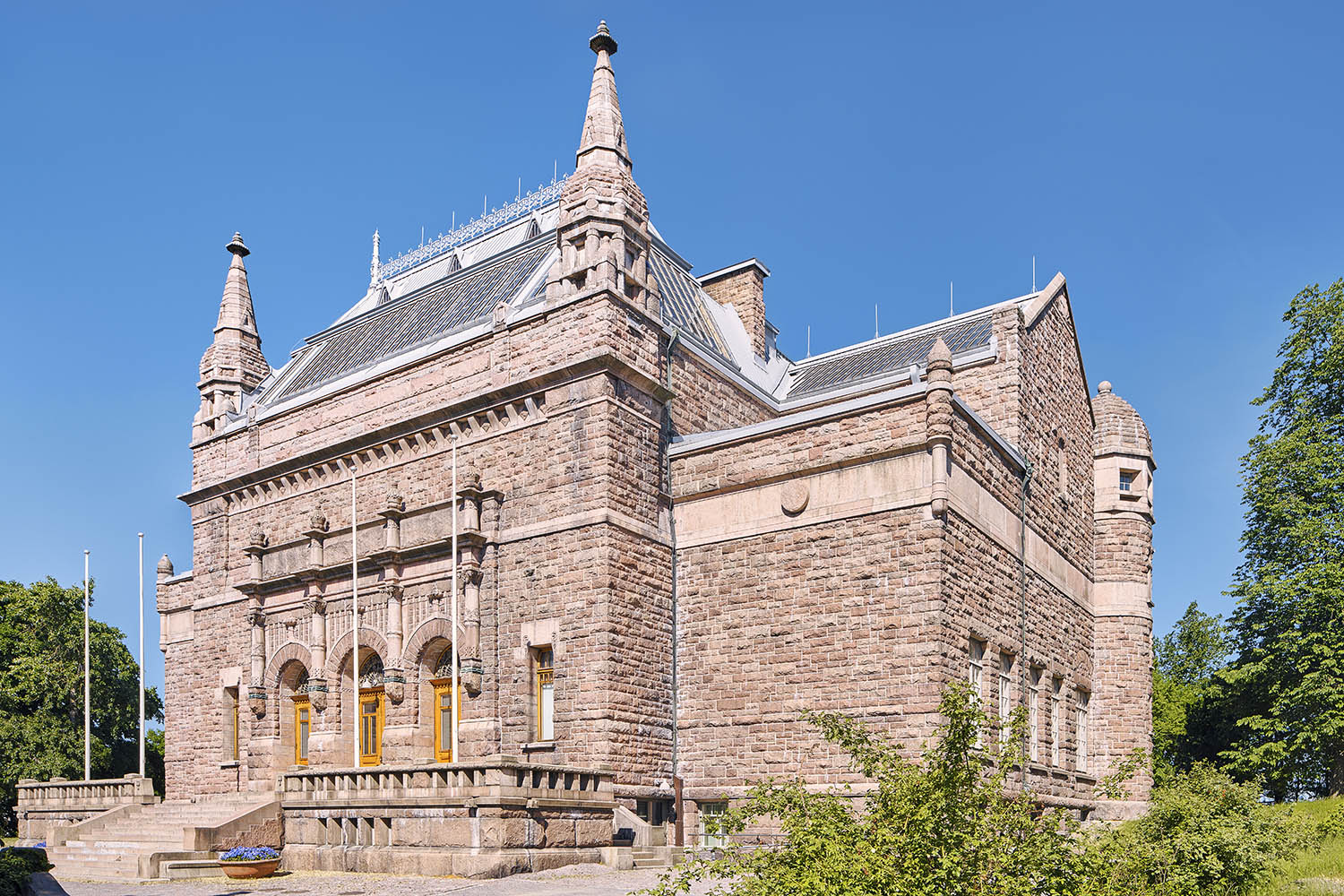
Climb the grand Aurakatu boulevard, lined with elegant Art Nouveau buildings, and you’ll arrive at the crown jewel atop the hill: Turku Art Museum. It’s an impressive sight on the outside , and inside, the art packs just as much punch.
The undisputed star of the museum’s collection is The Defense of the Sampo, painted in 1896 by Akseli Gallen-Kallela. This dramatic work brings to life a scene from The Kalevala, Finland’s national epic. In the painting, the bearded sage Väinämöinen and his crew defend their magical loot , the Sampo, a mythical machine that brings fortune , from a sky-diving, female monster determined to steal it back. Spoiler: the Sampo ends up at the bottom of a lake. Epic fail, literally.
Legend has it the painting was originally commissioned for a wealthy family’s dining room , but was swiftly returned. The lady of the house reportedly found it too violent, too colorful, and not exactly the vibe she wanted next to the soup. Her loss, Turku’s gain.
Park Hotel Turku — like stepping into a storybook
Right next to the Turku Art Museum, tucked away in a vine-covered Art Nouveau building, you’ll find Park Hotel Turku, hands down the city’s most enchanting place to stay. With its dreamy atmosphere and romantic decor, it feels less like a hotel and more like the setting for a fairy tale (minus the dragons).
Inside, you’ll find ornate wallpapers, vintage furniture, and the kind of soft lighting that makes everything , and everyone , look a little more magical. It’s the sort of hotel you’d expect to stumble upon in a tiny Central European town, not in the middle of urban Finland.
If we had to nitpick, the only “drawback” is the hill. After a long dinner in the city center, the walk back includes a few extra uphill steps. But hey , call it a scenic cooldown before curling up in your very own fairytale turret.
Kakola — spend the night in prison
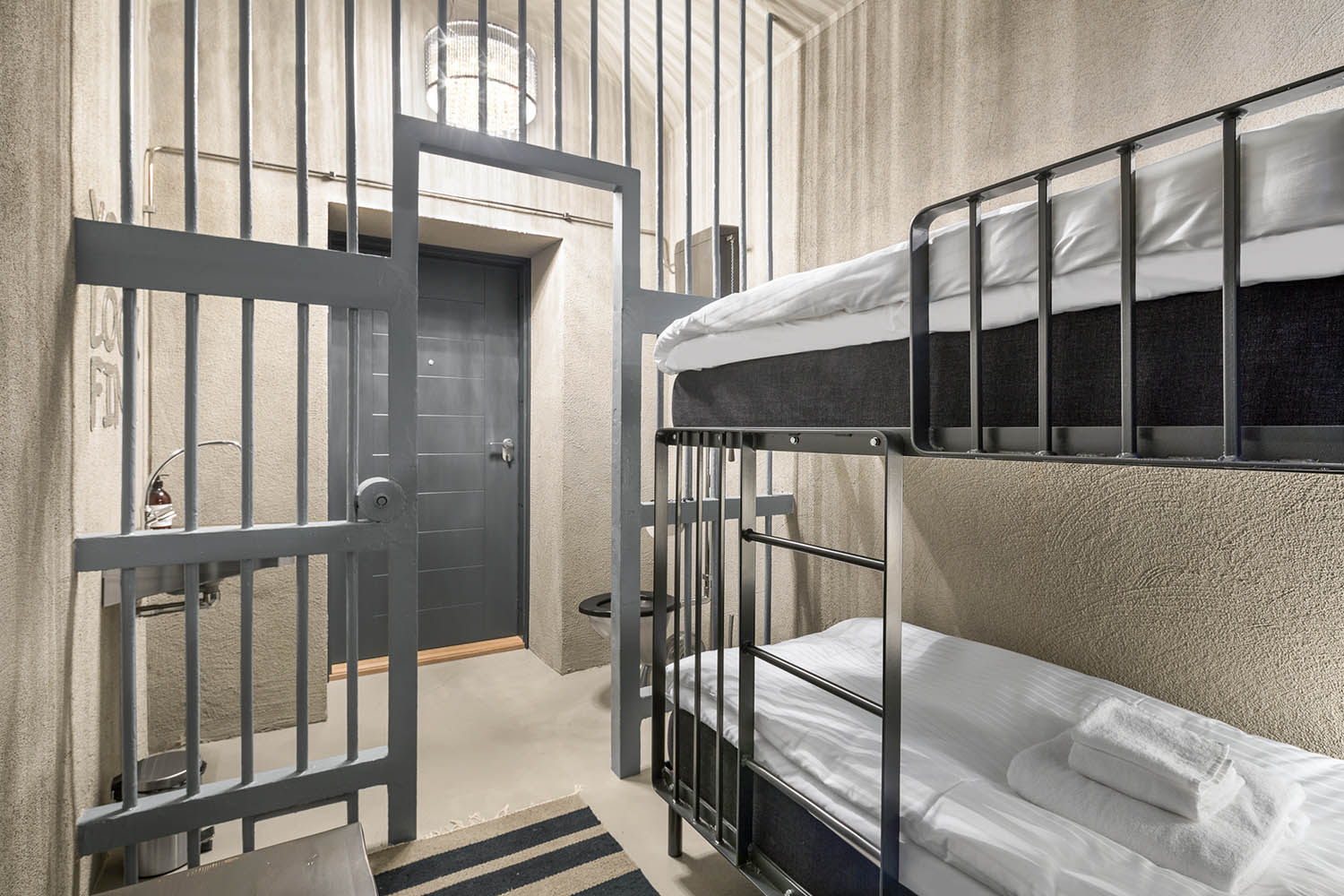
For a stay that’s a little more… unconventional, head up the hill to Hotel Kakola, once Finland’s most infamous prison, now one of its most intriguing hotels. The cheapest rooms are also the most fun: they let you sleep like a 19th-century inmate, complete with cell-style beds and, let’s just say, historically accurate bathrooms.
Perched high above the city, Kakola was once home to the country’s toughest criminals, locked away behind thick granite walls built in the late 1800s. But the prison days are long gone. These days, the area has transformed into one of Turku’s trendiest neighborhoods, with stylish apartments, restaurants, a bakery, and even a small craft brewery, Kakola Brewing Company, all carved out of the old stone.
Guided tours around the grounds offer a deep dive into the prison’s dark past, filled with stories of life behind bars. (Just don’t expect to wander into the old cells, those are off-limits.)
You can reach Kakola from the river via a scenic funicular ride that takes just one minute, and it’s free! At least, when it works. The only thing less reliable than a former prisoner’s alibi? Turku’s funicular.
Föri — a ferry so loved, they cancelled the bridge
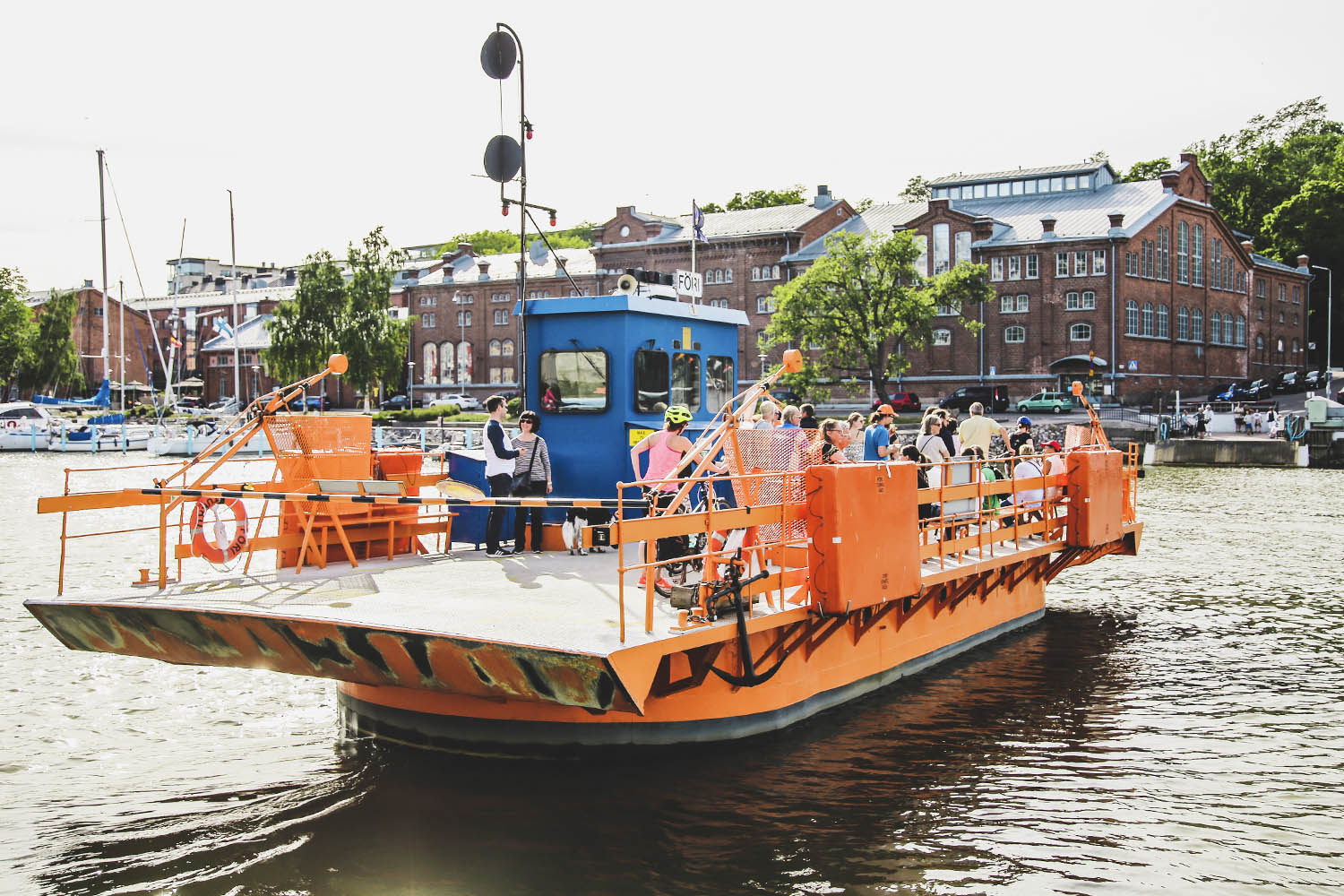
Right next to the Kakola funicular, you can cross the Aura River the old-fashioned (but still fully electric) way , on Turku’s legendary little ferry, Föri. Built in 1903, Föri has floated locals back and forth for over a century. Originally powered by steam, then diesel, and now electricity, it’s a living piece of history that still glides across the river every day , completely free of charge.
At one point, the city considered building a bridge here, but Föri’s charm was just too strong. The people of Turku weren’t having it , you don’t mess with a local legend.
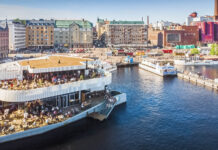
As you float across, take in the riverbanks: this is where Turku shows off. Along the Aura River are the city’s most beautiful views, landmark attractions, and more anchored restaurant boats than seems strictly necessary. Seriously , one has to wonder how there are enough Turku residents to fill them all. Does anyone in this city actually work… or is having a good time just the full-time job?
Ruissalo — Turku’s own island paradise
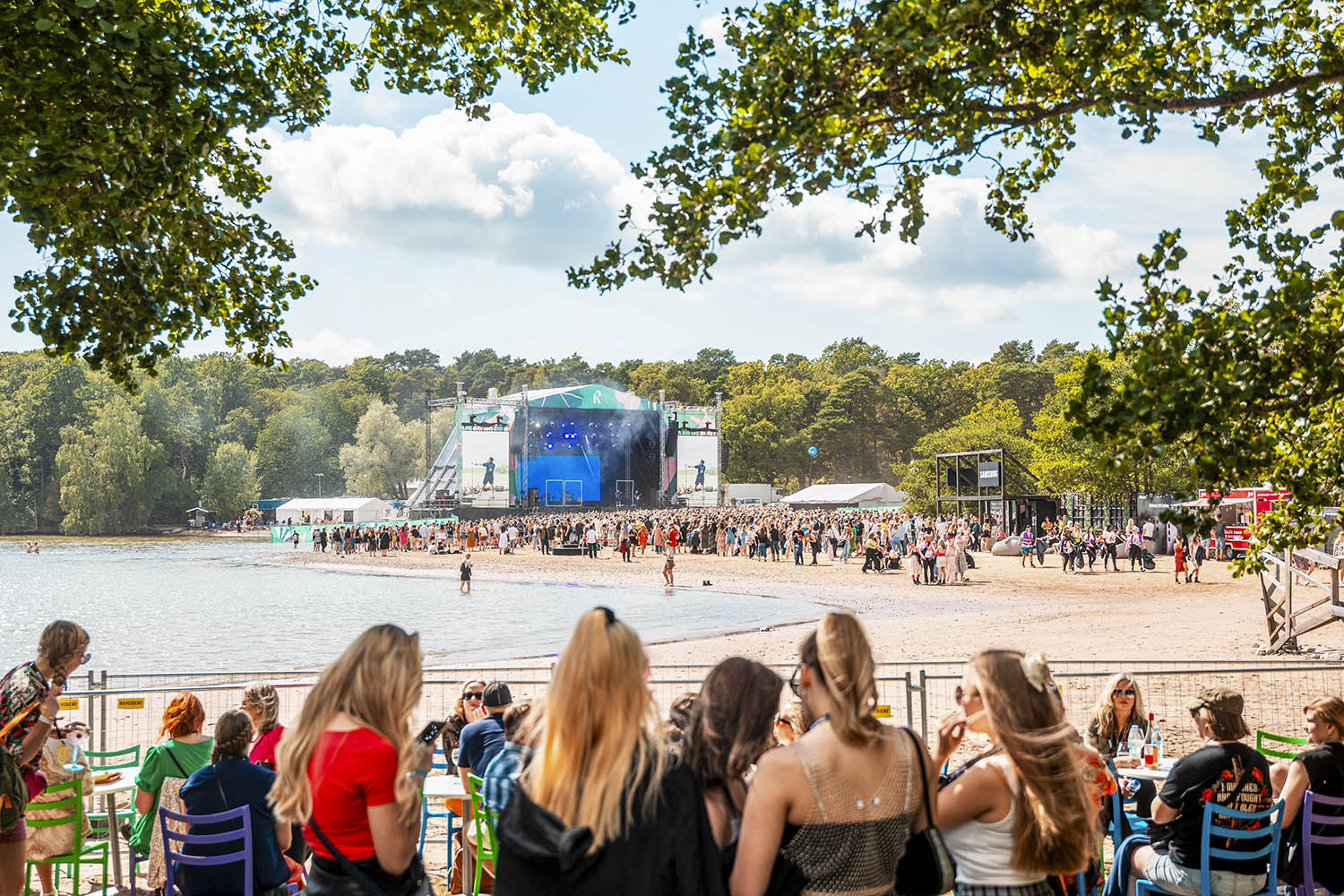
Yes, Turku even has its own slice of paradise , Ruissalo, a lush island just outside the city center, best known as the home of Ruisrock, Finland’s oldest rock festival. It’s an easy trip: just cross a short bridge near the harbour and you’re there.
But Ruissalo is worth a visit even when the amplifiers are off. This wooded island is full of scenic trails and charming lace-trimmed villas, a throwback to the 19th century when Turku’s bourgeoisie would escape here for the summer. Today, some of those villas house delightful cafés like Villa Bella Vista and Villa Kuuva. Try the doughnuts at the little red cottage , locals claim they’re the best in Turku, and frankly, we believe them.
Nature lovers can wander through the botanical garden, while those craving the sea breeze should head to the far end of the island: Saaronniemi. Here you’ll find a campground, the peaceful Ruissalo Spa & Hotel, and a long sandy beach perfect for lazy afternoons.
A short walk from the beach brings you to the real showstopper, Kukkarokivi, Finland’s largest glacial erratic. This giant boulder stretches nearly 30 meters long and stands over ten meters tall, as if casually dropped by an Ice Age giant. In winter, you can even walk right up to it across the frozen sea. Just don’t try to take it home.
Where to stay in Turku — from fairy-tale hotels to floating hostels
Looking for the perfect place to stay in Turku? You’ve got options , whether you’re dreaming of romantic wallpaper, riverside luxury, or sleeping in a ship’s cabin.
One of the most atmospheric choices is the charming Park Hotel Turku, nestled beside the Art Museum in a vine-covered Jugend building straight out of a storybook.
In the heart of the city, Solo Sokos Hotel Seurahuone on Eerikinkatu has been lovingly restored to reflect its original 1920s elegance , perfect for travelers who like their design with a dash of nostalgia.
If riverside views are more your thing, check into the sleek Radisson Blue Marina Palace right along the Aura River.
For something warm and homey, Centro Hotel Turku offers excellent value. Tucked into a quiet courtyard in the center and run by a local family, it’s known for its heartfelt hospitality.
Want something more adventurous? Just steps from Turku Castle, you can stay aboard a real ship at Museum Ship & Hostel S/S Bore, where cabins from a 1960s vessel have been converted into cozy rooms , breakfast and morning sauna included.
Budget travelers should check out HeseHotelli, a wallet-friendly option next to the bus and train stations. Fittingly, it’s run by the Turku-born burger chain Hesburger , so if you smell fries, you’re not dreaming.
And for an affordable, quiet escape a bit outside the city center, there’s Hostel Linnasmäki, about five kilometers from downtown. With a shared kitchen and outdoor grill area, it’s ideal for road-trippers and budget explorers.
Day Trips from Turku
From Turku, it’s definitely worth visiting Naantali, a beautiful wooden town just a 30-minute bus ride away. For architecture enthusiasts, a must-see is the Paimio Sanatorium, designed by Alvar Aalto.
Turku also serves as the starting point for the Archipelago Trail, along which you can explore Finland’s archipelago without needing your own boat.
Naantali — wooden charm, Moomins, and a presidential summer escape
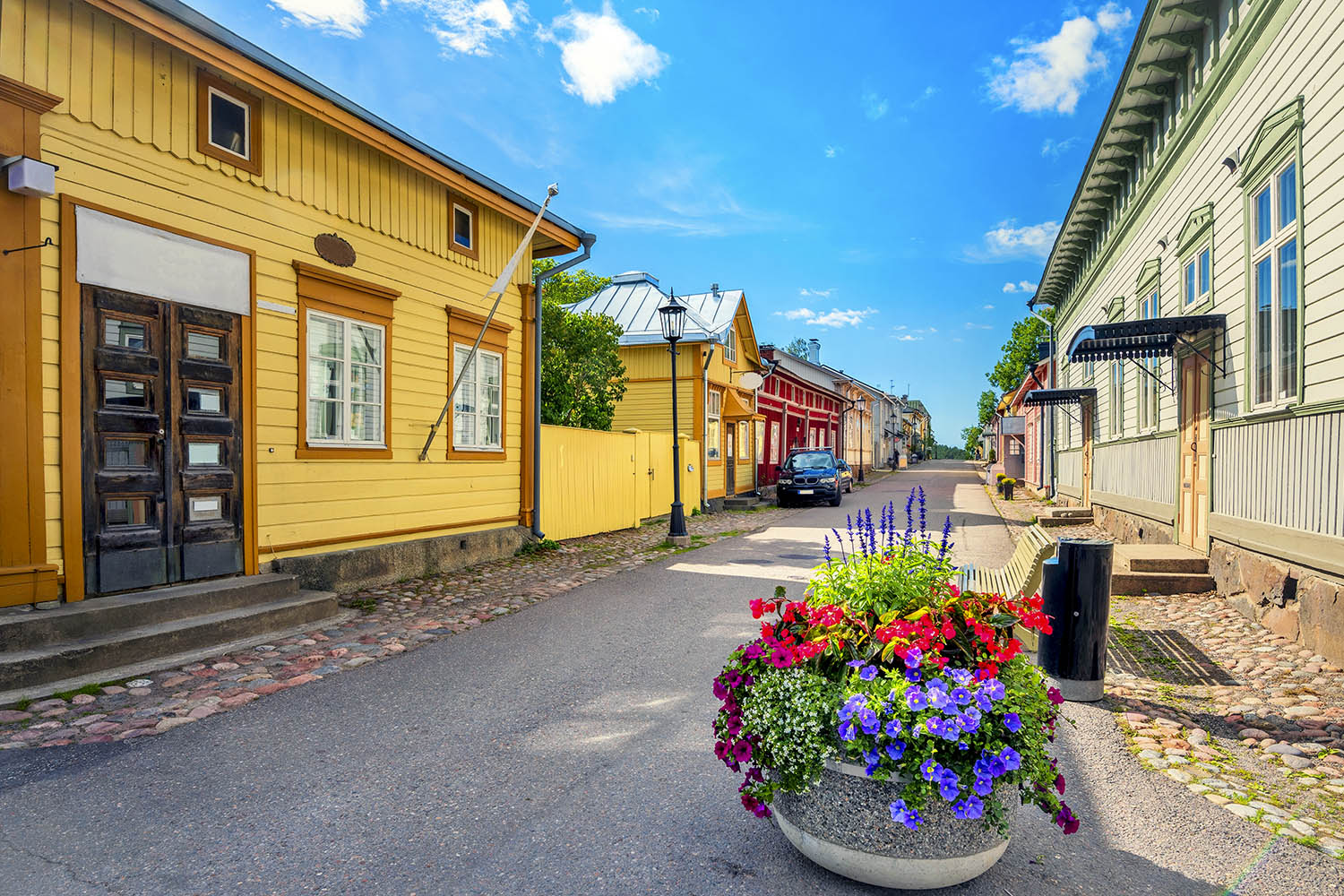
Naantali’s Old Town is a picture-perfect collection of 19th-century wooden houses that look like they were made for postcards. The main street, Mannerheiminkatu, is lined with boutiques, but the real magic is found in the side alleys , quiet, cobbled, and impossibly charming. At the end of the pedestrian street, you’ll find the guest marina, complete with a vintage wooden ice cream kiosk straight out of a summer daydream.
Just past the town’s medieval church, a small bridge leads to Moominworld, located on a tiny nearby island. Don’t expect roller coasters , this theme park is all about meeting familiar storybook characters and stepping into their peaceful, playful world.
Naantali’s charm hasn’t gone unnoticed , even the President of Finland spends summers here. His summer residence, Kultaranta, has recently renovated gardens that are open to visitors on guided tours. The one-hour walk takes you through formal flower beds, fountains, pavilions, and stories from the estate’s past. It’s peaceful, it’s elegant , and yes, even the hedges seem to have good manners.
Paimio Sanatorium — where healing met modern design
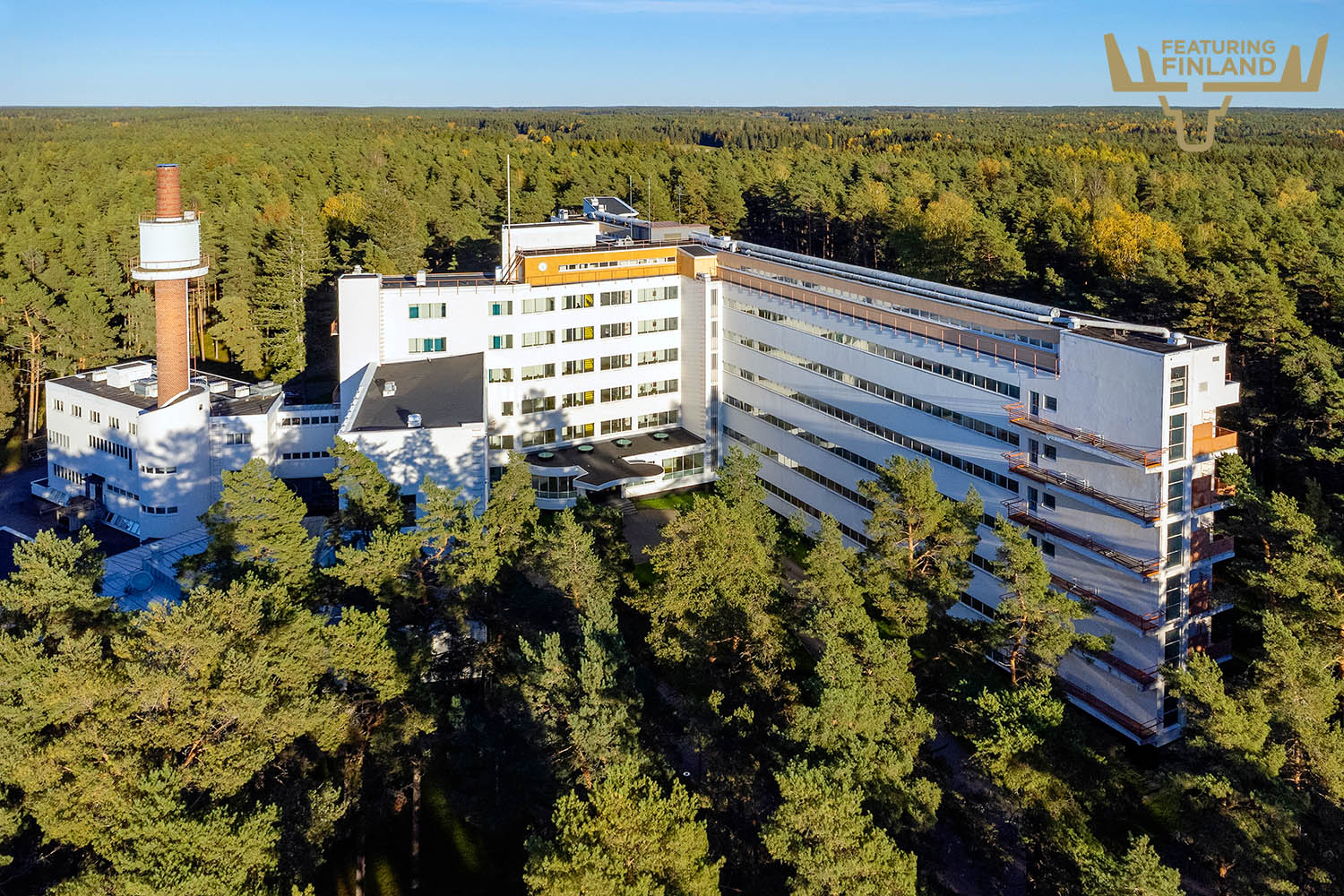
Completed in 1933, the Paimio Sanatorium was originally built as a tuberculosis treatment center, where the medicine of the day was rest, fresh air, and breathing exercises. Located just west of Turku, the building became Alvar Aalto’s first major masterpiece, and launched him onto the international stage.
Today, it’s considered a pinnacle of European functionalism. In line with new architectural ideals of the time, the design emphasized not just hygiene and practicality, but also beauty. Aalto’s signature rounded forms weren’t just stylish, they were easier to clean. The iconic, minimalist Paimio Chair was designed specifically for the patients, and the custom lighting fixtures with soft, downward-facing shades were created for this building alone.
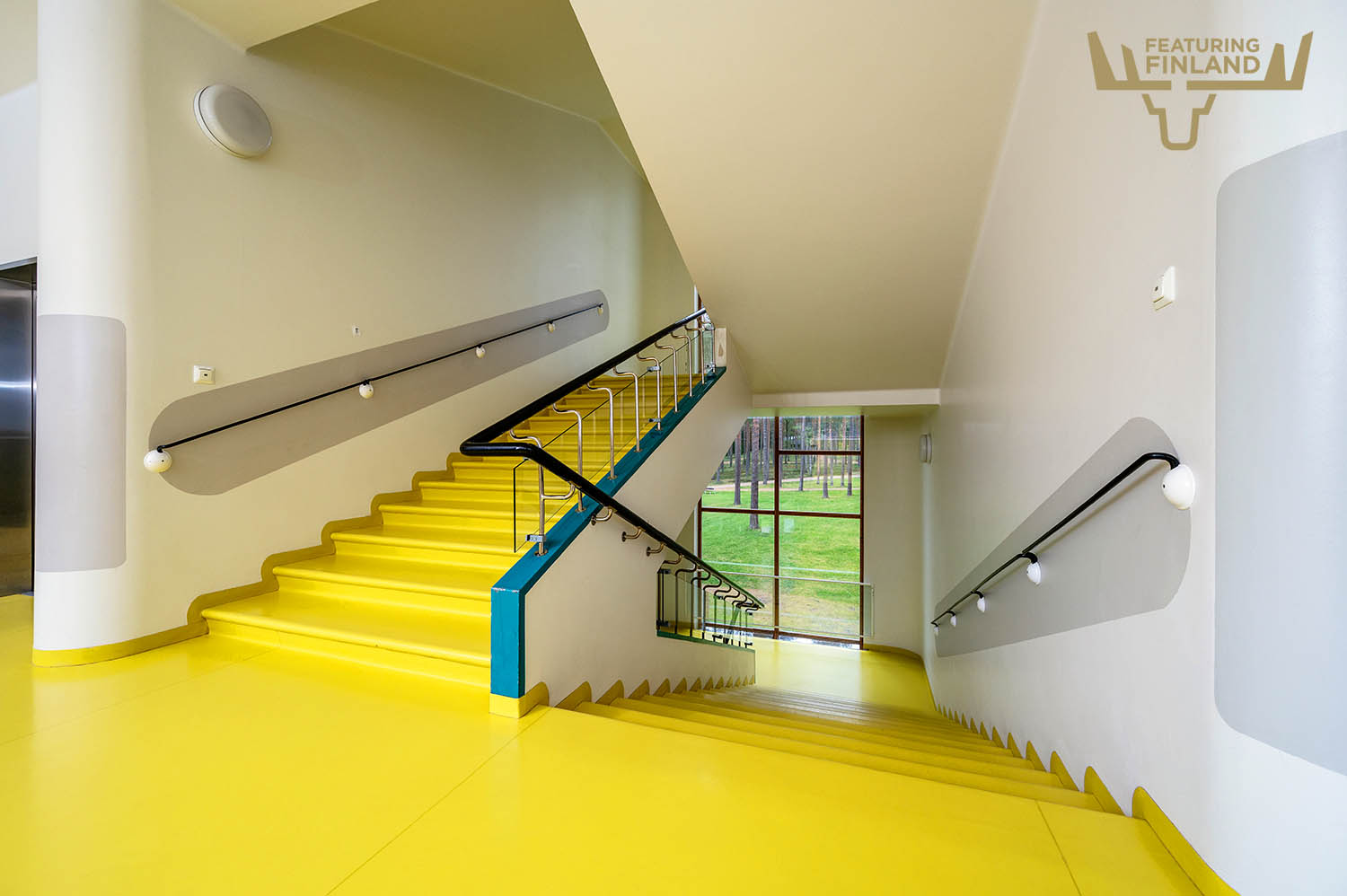
Surprisingly, the interiors are full of color: orange railings, a blue elevator, yellow floors , and even a custom tone known as “Paimio Blue,” developed by decorative artist Eino Kauria.
The sanatorium can be explored on guided tours. Visitors can also dine at the onsite restaurant or even stay overnight, either in former patient rooms (complete with original beds) or in the old nurses’ quarters. It’s not just a building, it’s a whole philosophy in concrete, color, and care.
Getting to Turku — easy connections by land and air
Turku’s railway station and bus station are conveniently located next to each other, just behind the Turku Art Museum. From there, it’s an easy walk into the city center.
Turku Airport offers direct flights to Åland (Mariehamn), Stockholm, Copenhagen, Riga, and Gdańsk, making it a handy gateway for both domestic escapes and quick international getaways.
Did you like this article? If you’re planning a trip to Finland, please book your hotel or rent a cabin or rental car by clicking on our affiliate links. We get a small commission, but you don’t pay any extra. Thanks for your support!