
Is there a more invisible art form than the statue? Once it’s in place, people walk past it daily without so much as a glance, even if it’s a masterpiece in bronze. Statues blend into the scenery so well, they practically turn into pigeons’ furniture.
And yet, many of them were a huge deal when first unveiled—scandalous, celebrated, and debated over coffee for weeks. So do yourself a favor: take a detour on your Helsinki trip and actually look at these statues. They might surprise you.
Scandalously Improper – Havis Amanda (1908)
She stands at the edge of Helsinki’s Market Square, flirtatiously flipping her hair—but when Havis Amanda was unveiled, she caused what might still be Finland’s biggest ever art scandal.
The statue was sculpted by Ville Vallgren, a Finnish artist living in Paris, already beloved by the French but yet to receive a single public commission from his homeland. That changed when the City of Helsinki asked him to create a statue to symbolize the capital.
Vallgren gave it his all. Despite being five meters tall, Havis Amanda is delicate and graceful. She’s a mermaid who has just risen from the sea onto dry land (and for the record, Copenhagen’s Little Mermaid didn’t arrive until years later).
But Finland was not impressed.
When the statue was revealed in 1908, critics complained that the female figure looked far too flirty—and far too European. It had none of the sober, brooding nationalism people expected. Worst of all, she was naked! The statue was declared scandalous.
The women’s rights movement loudly demanded its removal—not their proudest moment, though they did succeed in more important causes, like securing Finnish women the right to vote and stand for election in 1906, the first in Europe.
But it wasn’t just the nudity. Everything about the statue was wrong. Doctors complained her hips were too wide. The sea lions at the base were offensive too—after all, what kind of self-respecting Finnish artwork includes exotic animals that don’t even live here?
Eventually, even the political left joined in, especially outraged by the cost. A socialist newspaper grumbled, “With that money, we could’ve saved many a Helsinki maiden from prison and the poorhouse.”
Ironically, the French loved her. When the statue was displayed in Paris before being shipped to Finland, there was talk of placing it along the Champs-Élysées. And back in Finland, leading artists like Akseli Gallen-Kallela, Pekka Halonen, and Albert Edelfelt came out swinging in her defense.
In the end, the controversy faded, and Havis Amanda became one of Helsinki’s most beloved icons. Today, when Finland wins in ice hockey—or Eurovision—it’s at her feet that people gather to celebrate, sometimes diving into her fountain in such numbers that the city has to fence her off for protection.
Quite the glow-up for a statue once deemed unfit for public view.
Stone-faced Celebs – The Lantern Bearers (1914)
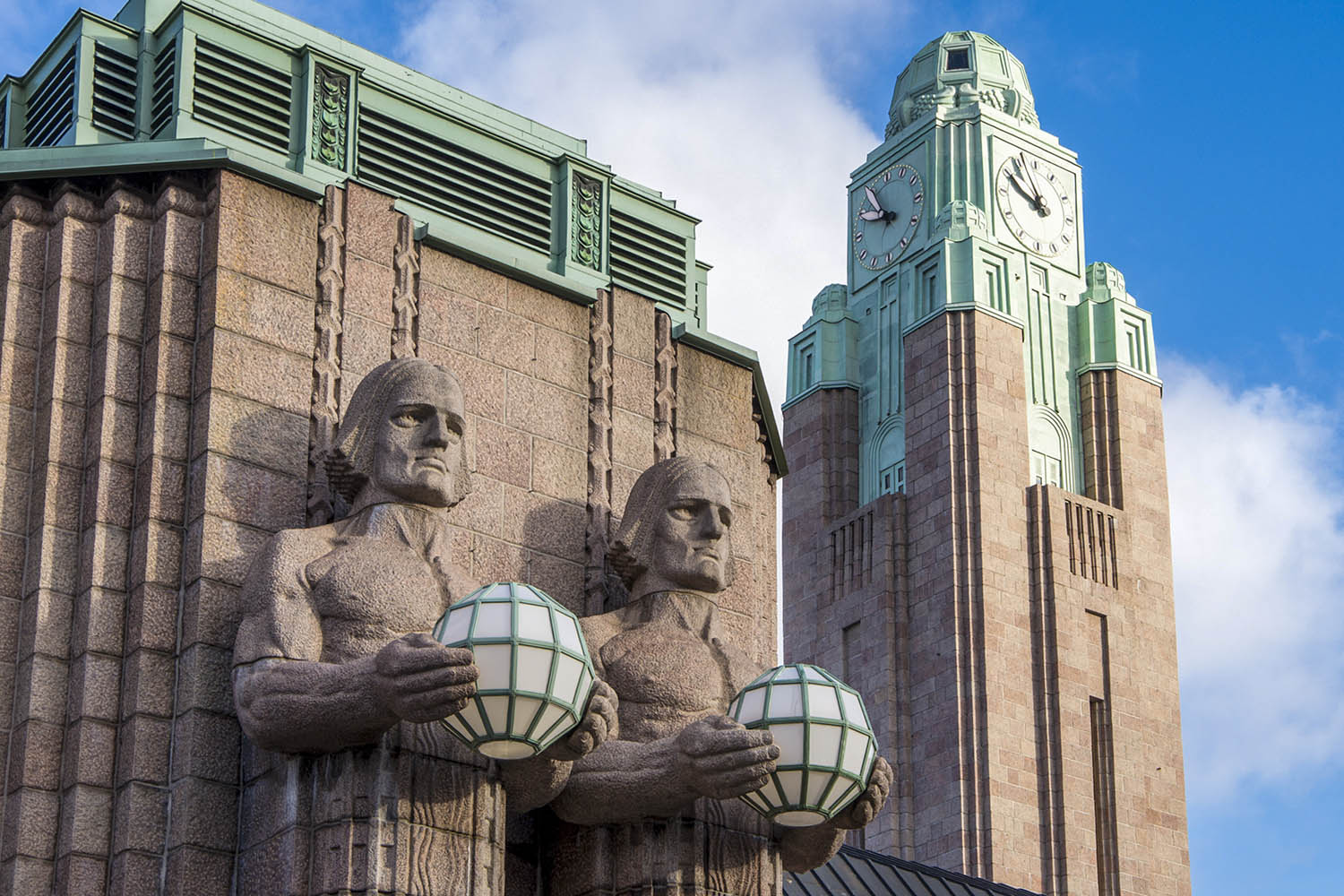
Massive granite men holding glowing orbs—The Lantern Bearers—are the unmistakable mascots of Helsinki Central Railway Station, and some of the most photographed figures in the city.
Sculpted by Emil Wikström, a key artist of Finland’s Golden Age, the statues were designed as part of the station’s grand National Romantic aesthetic. Wikström specialized in sculptures that were integrated into architecture—like the stone bears outside the National Museum, also his handiwork.
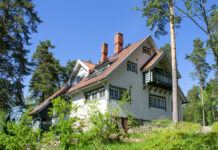
The models for these iconic figures? Legend has it they were inspired by the gardener at Wikström’s Visavuori studio in Pirkanmaa. Their hair? A distinctly conservative körtti religious style, adding a modest touch to their otherwise superhero physique.
Though designed as noble architectural features, the Lantern Bearers found unexpected fame a century later when they were brought to life—literally—in a beloved ad campaign by Finnish Railways (VR). In the commercials, the stone-faced quartet, affectionately dubbed Kivimiehet (“The Stone Men”), come alive with surprising charm and deadpan humor.
Turns out, even silent granite giants can become advertising gold.
Balls Blazing – The Running Paavo Nurmi (1925)
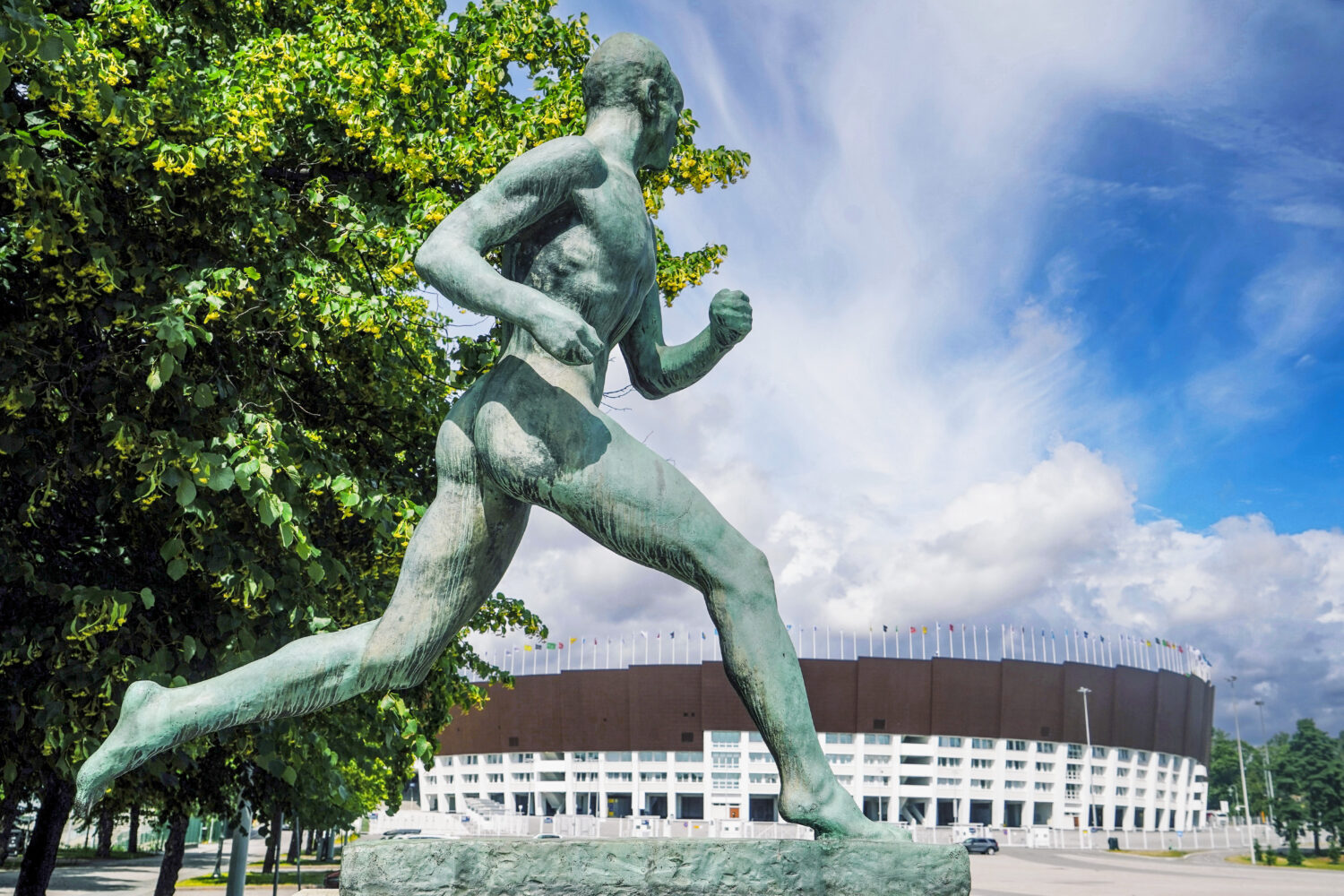
The stride is weightless, the gaze determined. This is how you sprint into immortality. Cast in bronze, Paavo Nurmi—still the most successful long-distance runner of all time—runs naked outside Helsinki’s Olympic Stadium like a Greek demigod. The nudity, however, caused some issues.
The statue, sculpted by Wäinö Aaltonen, was commissioned by the Finnish state in 1925, a year after Nurmi had swept five gold medals at the Paris Olympics and earned the nickname The Flying Finn. In total, Nurmi won 12 Olympic medals across the 1920, 1924, and 1928 Games.
But the idea of portraying a national hero in the nude was too much for modest Finnish sensibilities. No one dared to place the statue outdoors, so it was quietly tucked away inside the Ateneum Art Museum for years.
Only in 1952, the year of the Helsinki Olympics, was a second casting made and installed outside the stadium—where it went on to feature proudly in the Olympic posters.
And that notorious nudity? Nurmi’s much-discussed manhood was sculpted as a strategically vague bronze bump.
Why so Serious? – The Equestrian Statue of Marshal Mannerheim (1960)
Equestrian statues are the top tier of hero monuments—and for a long time, Finland didn’t have a single one. Understandably so: we’ve never had a king or a conquering warlord of our own.
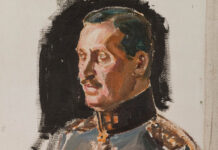
After World War II, however, it was decided that Marshal Mannerheim, who had led the Finnish army in a dogged defense against a far larger Soviet force, was statue-worthy—on horseback, no less.
That’s when the trouble started.
A sculpting competition was held, but none of the entries were deemed suitable. The problem? The demands for the statue were basically impossible: it had to be both artistically ambitious and totally neutral in tone—dignified, but not dramatic; heroic, but not too heroic.
Everyone had an opinion. Newspapers were flooded with letters to the editor, and journalists dubbed the entire project “a national maturity test.” To make things harder, nobody in Finland had ever sculpted a horse before.
Eventually, after much public debate, the assignment fell to sculptor Aimo Tukiainen. Lucky him. He toiled day and night while the statue committee hovered over his every move. The pressure was enormous.
It took Tukiainen five years to complete the statue. In the meantime, three other cities (Seinäjoki, Tampere, and Lahti) had already managed to unveil their own Mannerheim statues. When the Helsinki monument was finally revealed in June 1960, over 50,000 people gathered for the ceremony. It was solemn and respectful—though not one speaker thought to thank the sculptor.
The statue stirred up new controversy in the mid-1990s when plans were announced to build the Museum of Contemporary Art, Kiasma, right next to it. Critics howled that a modern art museum would “disgrace the Marshal” and ruin the monument’s view. Tukiainen himself was so incensed he took the matter to court.
In hindsight, the outrage seems a bit silly. Before Kiasma, Mannerheim sat alone in a concrete wasteland at a busy intersection. Thanks to the museum, he now has a worthy stage. But was it a coincidence that American architect Steven Holl designed granite benches beside the statue that are—let’s face it—much better for skateboarding than sitting? Marshal Mannerheim might have approved—after all, he was a bit of a wild one in his youth. Read more about the extraordinary life of Mannerheim.
Didn’t Look Enough Like Its Subject – The Sibelius Monument (1967)

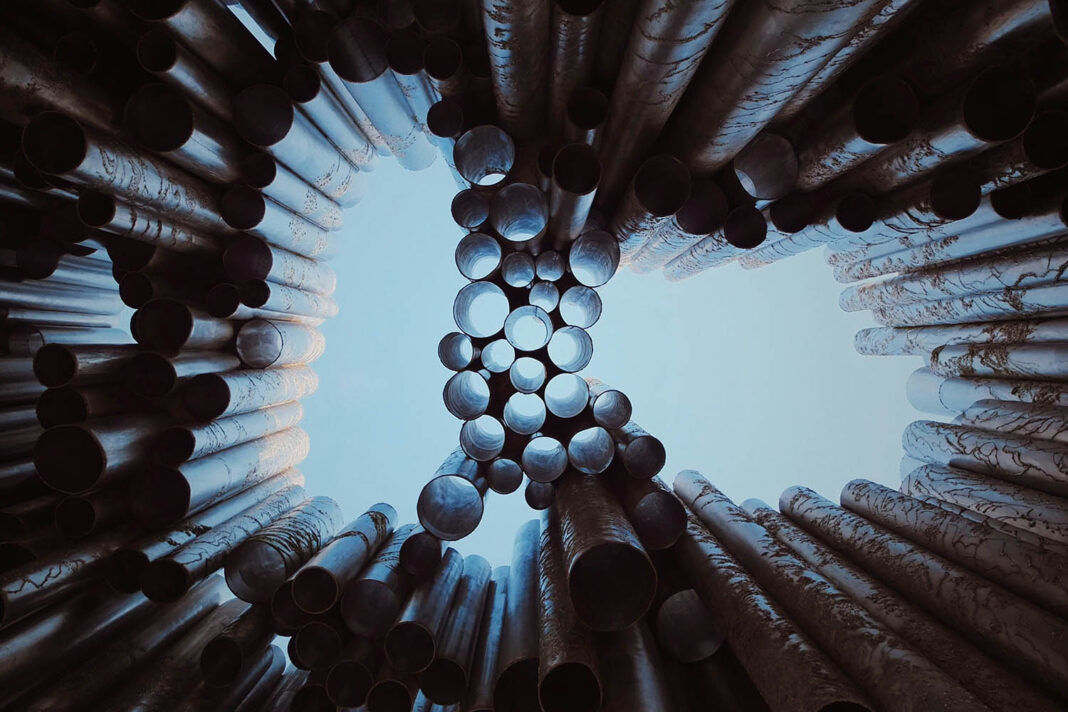
Today, the Sibelius Monument is easily Finland’s most beloved abstract artwork—and one of Helsinki’s most visited sights. Honoring the country’s most famous composer, the sculpture itself seems to hum: made of over 600 welded steel pipes, it invites visitors to shout into it, tap it, and quite literally make it sing.
But when Finns first laid eyes on the design, the reaction wasn’t harmony—it was outrage. Many were baffled by the modern style, and some were downright furious. One person even mailed the sculptor, Eila Hiltunen, a box of excrement in protest.
To appease the critics, Hiltunen agreed to compromise. When the monument was finally unveiled in 1967, she had added a separate bust-like relief of Jean Sibelius beside the main sculpture—just to make the subject a little clearer to the skeptical public.
Today, her bold vision is widely admired. Hiltunen’s abstract metal sculptures can now be found from Berlin to New York and Rome to Riyadh. But it all started right here, with a soundless symphony of steel in a quiet Helsinki park.
Did you like this article? If you’re planning a trip to Finland, please book your hotel or rent a cabin or rental car by clicking on our affiliate links. We get a small commission, but you don’t pay any extra. Thanks for your support!