
If you’re planning to admire any amount of Finnish art, sooner or later someone will mention the Kalevala. This is not a band, a cheese, or a sauna technique, but rather Finland’s national epic—a sprawling 19th-century compilation of ancient oral poetry that helped shape the country’s identity, inspire its greatest artists, and leave generations of schoolchildren quietly weeping into their textbooks.
The Kalevala was compiled in 1835 by a country doctor named Elias Lönnrot, who wandered the backwoods of Karelia in the Eastern part of Finland collecting old songs, spells, laments, and ballads from rune-singers with encyclopedic memories. Then he strung them together into a single poetic mega-epic, which inspired Tolkien on his own mythos makings.
It’s Finland’s Iliad, Odyssey, and Lord of the Rings rolled into one, but with a lot more shape-shifting, sorcery, and passive-aggressive courting.
The Main Characters of Kalevala
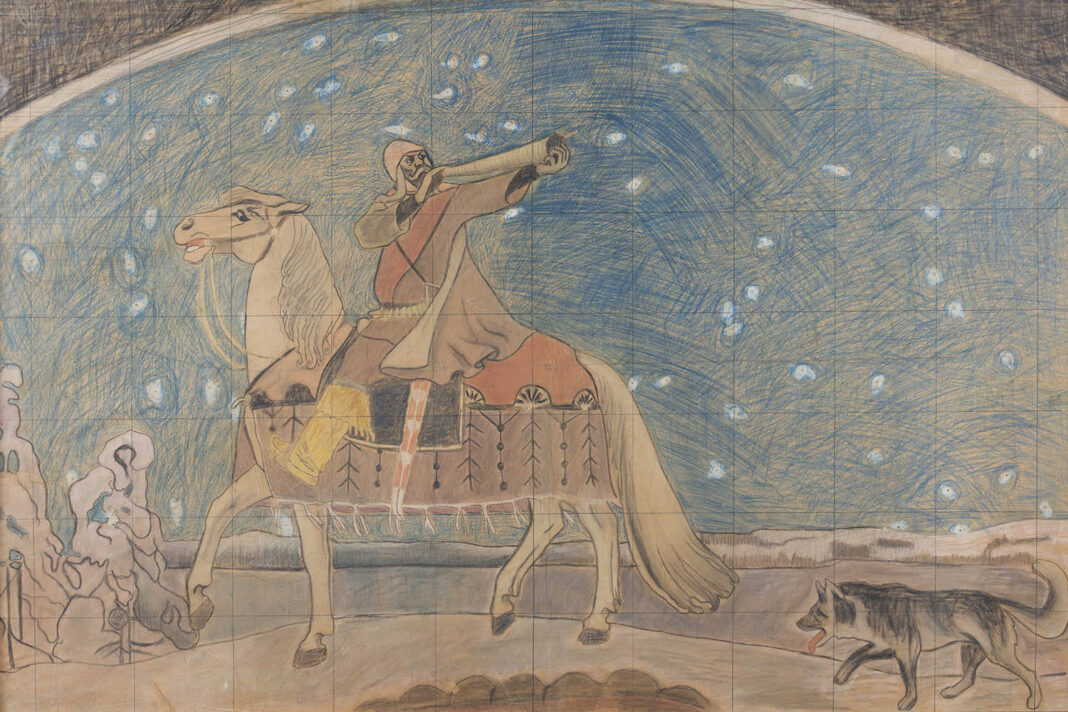
The main protagonist is Väinämöinen, a hero you get when you cross Gandalf with a melancholy folk singer. He’s ancient, bearded, plays a magical zither (the kantele), and spends much of the epic trying to build boats, woo maidens, or float away from his feelings.
Another important character is Lemminkäinen, the pretty-boy adventurer with a mother complex. At one point, he dies, is chopped into pieces, and is then reassembled by his mum, which is sort of the most Finnish resurrection ever.
And then there is Ilmarinen, a blacksmith so talented he can forge just about anything—except, it seems, healthy relationships.
The Storyline of Sampo, the Magic Wealthmaker
Among the many tangled plotlines of the Kalevala, the most famous centers on a magic machine called the Sampo—a miraculous contraption that grinds out gold, grain, and salt, presumably forever, and with no maintenance required.
The saga begins when Ilmarinen the blacksmith falls for a fair maiden from the North. Her mother, Louhi—the formidable matriarch of Pohjola and part-time sorceress—agrees to the match, but only if Ilmarinen forges the Sampo: a machine of infinite abundance.
Ilmarinen is, understandably, not thrilled. (He likely suspects that no good has ever come from inventing bottomless wealth for someone else.) But love clouds judgment, and so he hammers away. And voilà—the Sampo is born.
What is the Sampo, exactly? No one knows. Think it as a combination of treasure chest, coffee grinder, and political metaphor.
But just as the final bolt is tightened, Louhi casually announces she will keep the Sampo, but that Ilmarinen won’t be getting the bride after all—something about unspecified terms not being fulfilled.
Enter the wizard Väinämöinen, who decides that this injustice simply cannot stand. He ropes in Ilmarinen and the ever-fiery Lemminkäinen for an old-fashioned epic heist.
They sail north, steal back the Sampo, and set off across the sea. Louhi gives chase, transforms into a giant bird (as one does in these situations), and during the ensuing struggle, the Sampo falls into the water and breaks into pieces.
Väinämöinen, never one to lose poetic momentum, declares this a success. After all, the Sampo’s fragments wash ashore and bring fertility and prosperity to the land.
Kalevala in Finnish Culture
You don’t need to read the whole book, but knowing a few of these stories goes a long way toward understanding why Finnish art is so moody, mystical, and obsessed with lakes, fate, and slightly doomed heroes.
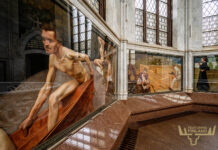
Kalevala is so full of rich symbolism that artists like Akseli Gallen-Kallela just couldn’t resist. If you’ve seen Finnish paintings featuring long-bearded men staring into the distance or mystical battles over glowing artifacts, chances are they’re straight out of the Kalevala.
And once you’ve acquainted with Väinämöinen and his crew, you’ll start spotting them everywhere—from museum walls to music, architecture and jewellery.
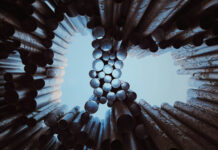
Take Jean Sibelius, for instance. Finland’s national composer (best known for his epic Finlandia, which sounds like a country slowly rising from the ice with a full brass section) drew heavily on Kalevala stories for his symphonic poems, turning ancient myths into soaring symphonic poems with names like Lemminkäinen’s Return and The Swan of Tuonela. The latter, in case you’re wondering, is about a mystical swan that glides around the river of death—because of course it is.
The Finnish metal scene also has a soft spot for the Kalevala—though “soft” might be the wrong word. Bands like Amorphis have whole albums inspired by the Kalevala—but with more guitars and less chanting.
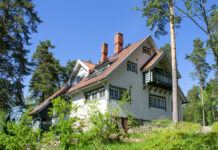
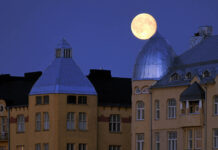
Even Helsinki’s Art Nouveau architecture is filled with subtle nods to the epic and national romanticism. Around the city, you’ll spot carved stone bears, stylized pine trees, and heroic men with windswept beards and intense stone stares, looking as if they’re midway through composing a spell or just lost in existential thought. Some buildings—like the gloriously grumpy Pohjola Insurance building—look less like offices and more like fortresses dreamed up by Väinämöinen himself, in case he ever needed coverage against dragons, trolls, or Finnish heroes with a bit too much vodka in their system.
Then there’s Kalevala Koru, the jewellery company named after the epic itself. Their early designs were quite literally inspired by Iron Age artefacts dug up from Finnish soil—making them one of the few accessories on earth that can truthfully claim both national symbolism and archaeological credibility. It’s myth made wearable, and surprisingly stylish.
And finally, even if you never open a single page of the Kalevala, you’ll see its influence in the way Finland sees itself. A land shaped by forest and fate. People who believe in quiet perseverance, meaningful silences, and making things beautifully from scratch. It’s in the mournful hush of a Sibelius melody, the damp stillness of a foggy lake, or the polite endurance of someone hand-planing a sauna bench for five hours without uttering a word.
That, dear reader, is Kalevala. Not just a story—but a national mood.
Did you like this article? If you’re planning a trip to Finland, please book your hotel or rent a cabin or rental car by clicking on our affiliate links. We get a small commission, but you don’t pay any extra. Thanks for your support!