
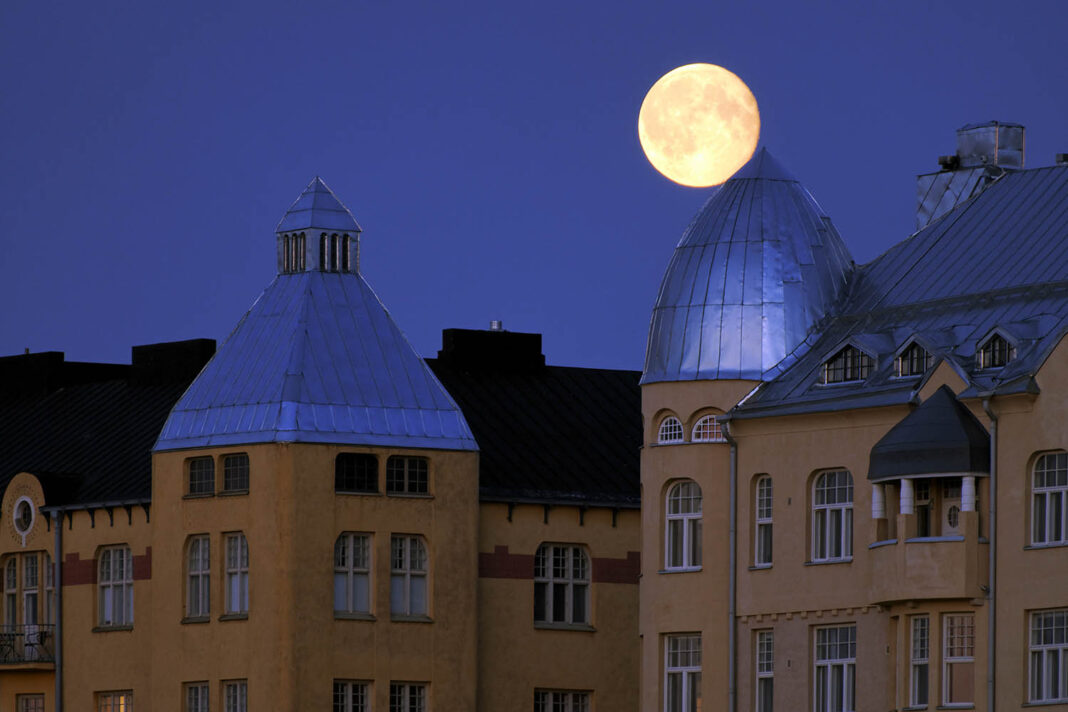
Arched gateways, whimsical stone owls, and turrets straight out of a storybook—Helsinki is a city of Jugendstil. In fact, the Finnish capital boasts over 600 Art Nouveau buildings, making it one of the most cohesive and characterful Jugend cities in Europe.
But wait—Jugend? Isn’t it called Art Nouveau?
Indeed. While much of the world knows this flowing, nature-inspired architecture by its French name, in Helsinki—and across Central Europe—the style was dubbed Jugendstil, named after the German art magazine Die Jugend. The name stuck in Finland, but the local version of the style evolved into something more rugged and romantic: national romanticism. Here, the curving lines and ornate details were infused with Finnish folklore, Kalevala mythology, medieval church motifs, and inspiration from the wild, untamed Nordic landscape.
It wasn’t just a style. It was a statement. In the early 1900s, Finland was still part of the Russian Empire, and this architecture became a way to build a visual identity for an independent-minded nation—brick by decorative brick.
Here’s where to find the most beautiful and eccentric examples of Helsinki’s Jugend treasures—and one perfect day trip outside the city where the whole movement found a home.
The Pohjola Insurance Building – Dragons, Bears, and National Dreams
Aleksanterinkatu 44
If you only stop to admire one Jugend façade in Helsinki, make it this one. Completed in 1901 by the star trio of Gesellius, Lindgren & Saarinen, the Pohjola Insurance Building is a riot of stone creatures, Nordic mythology, and nationalist ambition—a granite fairy tale in the heart of the city.
The client was an insurance company. The design brief? Apparently: “protect people from everything—including bears, trolls, and maybe the odd dragon.”
Look closely and you’ll see them: snarling beasts carved into the walls, owls perched in shadowy corners, forest spirits lurking in the doorways. Roots twist through the stone, warriors gaze down from cornices, and Kalevala-inspired reliefs climb up the façade like a carved epic.
Step inside, if the doors are open. The wood-paneled lobby and stained-glass windows are just as atmospheric, and the mood is pure Nordic Hogwarts—if Hogwarts had an insurance clause for dragon fire.
Katajanokka – A Whole Neighborhood of Jugend
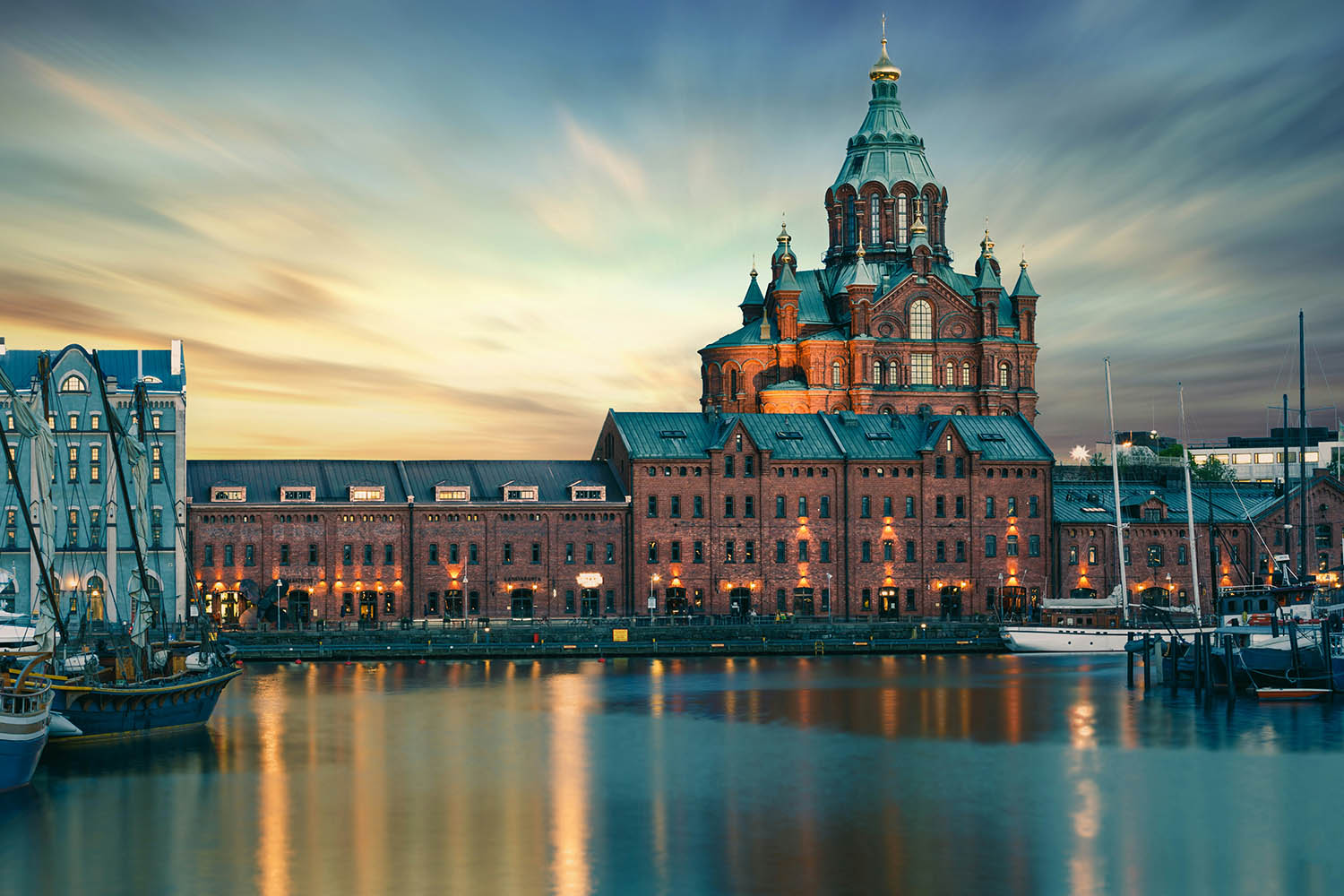
Just behind the iconic copper domes of Uspenski Cathedral, a short bridge leads to Katajanokka—a quiet island neighborhood that holds one of Europe’s most intact Art Nouveau districts. Strolling its streets is like leafing through a beautifully illustrated fairy tale.
Most of the apartment buildings here were built in the early 1900s, each one a unique expression of Jugend imagination. You’ll find pastel facades, iron balconies curling like vines, granite detailing, and animal figures hidden in the architecture: owls, trolls, bears, and the occasional sly fox.
The atmosphere is calm, elegant, and surprisingly residential. This is where locals walk their dogs past stone dragons, and where Tove Jansson spent her childhood, at Luotsikatu 4. It’s said the turreted building just up the street, at Luotsikatu 1, was the inspiration for the Moominhouse—and once you see it, you’ll understand why.
Jugendsali – A Jugend Café with a Side of Banking History
Back in the city center, just steps from Market Square, you’ll find one of Helsinki’s few Jugend interiors open to the public: Jugendsali, a former bank turned café and event space.
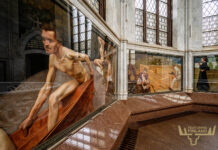
Designed by Lars Sonck, it’s a serene, light-filled hall where vaulted ceilings, intricate columns, and tall arched windows turn a coffee break into an architectural moment. It’s a great place to pause between walks, with a slice of cake and a bit of Jugend splendor on the side.
Eira Hospital & Huvilakatu – Castles and Soap Operas
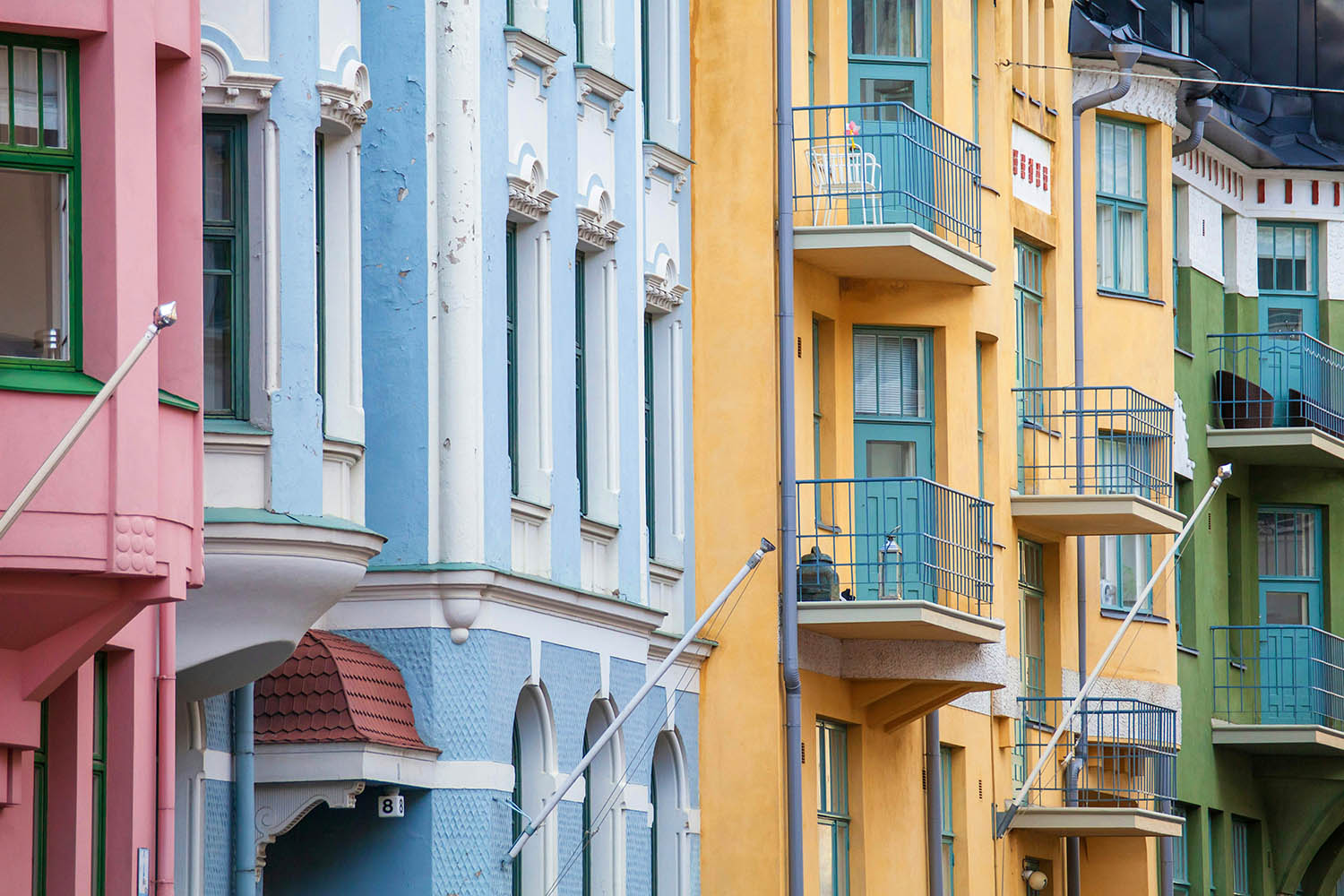
In the elegant southern district of Eira, Jugend takes on a more domestic—but no less fantastical—form. Eira Hospital, another design by Lars Sonck, looks less like a clinic and more like a romantic castle, complete with towers and stone balconies.
Just around the corner is Huvilakatu, often called the most photogenic street in Helsinki. Lined with colourful, ornately detailed townhouses, it’s a living showroom of Jugend design. And if it feels oddly familiar, that’s because it starred in the Finnish soap opera Salatut elämät for over 15 years.
Come for the architecture, stay for the Instagram.
Helsinki Central Railway Station – A Late Jugend Masterpiece in Granite

Kaivokatu 1
Completed in 1919, the Helsinki Central Railway Station is one of the grandest public buildings in Finland—and one of the last major works in the Jugend style before modernism took over. Designed by Eliel Saarinen, it’s a masterclass in balancing fantasy with function.
The station’s most famous features are the Lantern Bearers—four stoic, slightly surreal granite figures flanking the main entrance, each holding a glowing orb of light. Sculpted by Emil Wikström, they’ve become beloved mascots of the Finnish railways, immortalized in advertising, animation, and cultural memory.
Inside, the arched hall, carved details, and vast clock tower continue the theme of grandeur-with-a-human-face. This is Jugend grown up: confident, functional, but still just a little bit magical.
Hvitträsk – Day Trip to the House of Saarinen
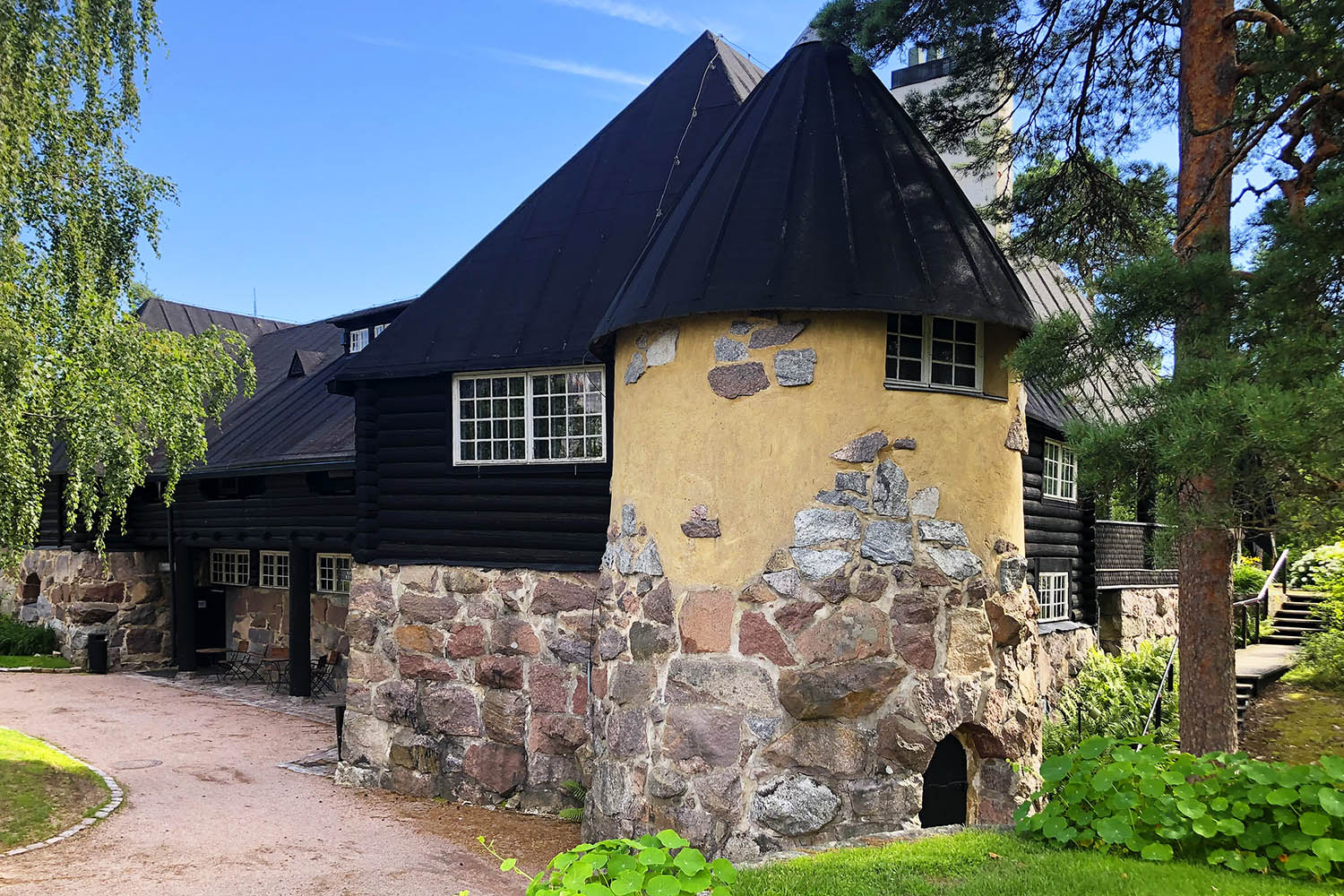
If Helsinki is filled with Jugend buildings, Hvitträsk is where the soul of the movement lived.
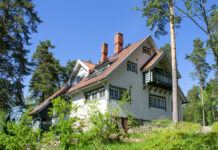
Tucked into a hillside overlooking a lake in Kirkkonummi, just 30 km West from Helsinki, Hvitträsk was designed and built in 1903 by Eliel Saarinen, Herman Gesellius, and Armas Lindgren as their shared home and studio—a full-scale experiment in architecture, art, and idealism.
This isn’t just a house—it’s a total vision. A National Romantic dream in stone and timber, full of carved beams, medieval flourishes, Kalevala motifs, and custom furniture. Every room tells a story, and the surrounding nature is an essential part of the design, not just a backdrop.
But it wasn’t just the architecture that was dramatic. The personal lives of its creators became tangled: Saarinen and Lindgren moved in with their families, while Gesellius arrived with his sister Loja. A year later, Saarinen divorced his wife and married Loja, and Gesellius married Saarinen’s ex-wife. Remarkably, both couples continued living and working together at Hvitträsk, undeterred by the romantic entanglements.
From this unlikely commune, the trio designed many of Finland’s greatest architectural landmarks, including the National Museum and Helsinki Central Station. Eventually, the Saarinen family moved to the United States, where their son Eero Saarinen became one of the most celebrated American architects of the 20th century.
Today, Hvitträsk is open as a museum, complete with gardens, exhibitions, and a charming café. It’s the perfect half-day outing from Helsinki—a chance to step into the heart of Finnish Jugend, where architectural ideals, artistic vision, and very human drama are etched into every timber beam.
Did you like this article? If you’re planning a trip to Finland, please book your hotel or rent a cabin or rental car by clicking on our affiliate links. We get a small commission, but you don’t pay any extra. Thanks for your support!