
Helsinki is the most popular travel destination in Finland—and for good reason. With its mix of top cultural sights, world-class museums, historic architecture, and easy access to nature, Helsinki offers a city break that’s both rich in experience and refreshingly low on stress. Whether you’re into art, history, design, or just want to stroll by the sea with a cinnamon bun in hand, Helsinki has plenty to see and do.
With a population of around 650,000 (1.2 million including nearby Espoo and Vantaa), Helsinki isn’t a huge metropolis—but that’s part of the appeal. You can walk from one side of the city center to the other in less time than it takes to queue for brunch in Berlin. Even if you’re only visiting for a weekend, you can pack in a lot without feeling rushed.
Most of Helsinki’s top sights are located within walking distance of the central railway station. From there, you’re minutes away from landmarks like Senate Square, Helsinki Cathedral, the Ateneum Art Museum, and Kauppatori (Market Square), where you can hop on a ferry to Suomenlinna Sea Fortress—a UNESCO World Heritage Site.
Architecturally, the city is a delicious buffet: neoclassical elegance, Jugendstil whimsy, Nordic minimalism, and the occasional concrete mistake from the 70s (just consider it historical context).
Helsinki is just the right size for sightseeing: big enough to stay interesting, but small enough to skip the information overload. Even the day trip options are superb—whether it’s the cobbled charm of Porvoo, the artsy calm of Fiskars, or the lake-dotted trails of Nuuksio National Park, all just a bus ride away.
In this article, you’ll find a handpicked selection of the best Helsinki sights and must-see landmarks—from famous highlights to offbeat local favorites. Whether you’re here for a weekend or a full week, this guide will help you make the most of your time in Finland’s not-too-big, not-too-small, just-right capital.
For even more ideas, check out our other guides on Helsinki’s museums, saunas, family attractions, and nature spots.
Central Railway Station – A National Romantic Welcome to the City
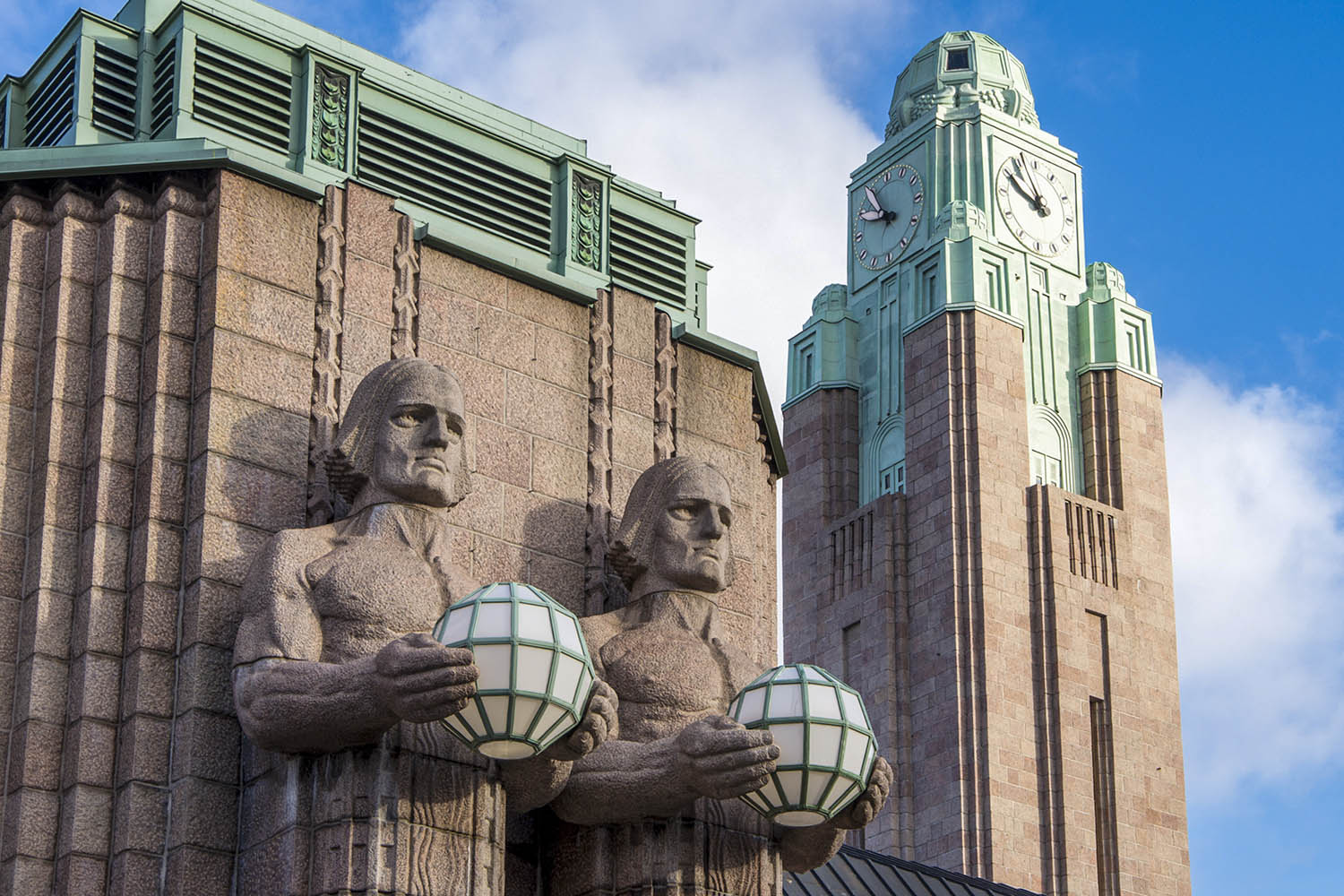
If you’re arriving in Helsinki by train from the airport, this will be your grand entrance: Helsinki’s Central Railway Station, a true Jugend Style beauty that’s earned a permanent place on international architecture lists.
Designed by Eliel Saarinen—one of Finland’s most iconic architects—the station is a masterpiece of national romantic style. Saarinen’s other major contribution to the city skyline is the National Museum of Finland, and his talent later took him across the Atlantic to make a name for himself in the U.S. as well.
Flanking the station’s main entrance are the famous granite “Lantern Bearers” statues, created by sculptor Emil Wikström, another giant of the Jugendstil era. These stoic stone figures have become beloved mascots of Helsinki.
And the inside? The best way to enjoy it is over a meal or drink at the station’s restaurant, where you can admire Landscape from Koli, a nearly 40-square-meter oil painting by Eero Järnefelt depicting Finland’s most iconic national landscape.
If you’re staying overnight, the station even houses the stylish Scandic Grand Central Helsinki hotel—proof that not all train stations are just for passing through.
Senate Square and the Cathedral – Straight Out of a Postcard
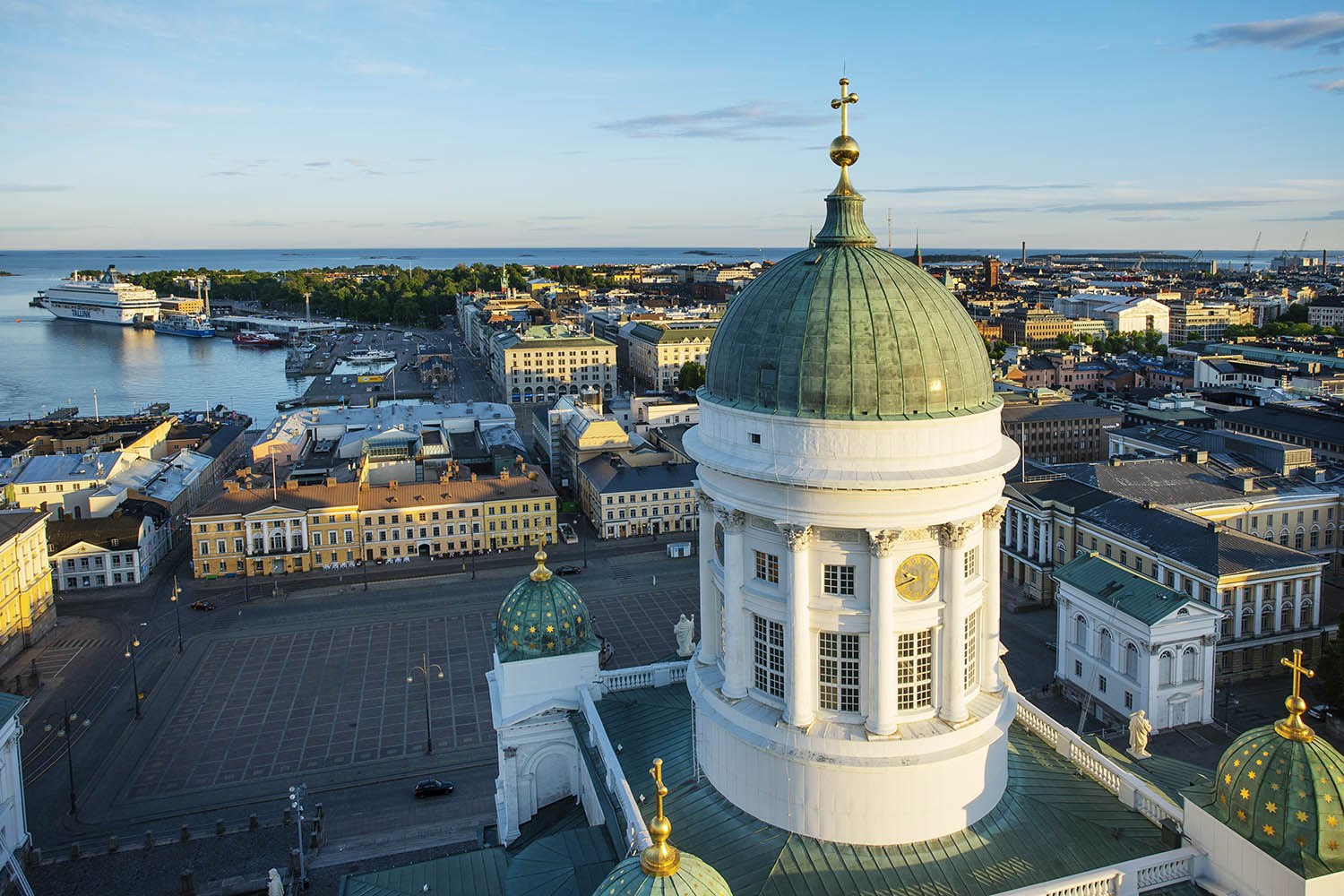
Senate Square is the historical heart of Helsinki—and a breathtakingly beautiful one at that. Rising above the open space is the city’s most iconic landmark: the snow-white Helsinki Cathedral, standing like a guardian angel watching over the capital.
On either side of the square are two stately buildings—the University of Helsinki and the Government Palace—that look almost like mirror images, but with a twist. The university’s columns follow the Ionic order, a nod to ancient Greece and the ideals of learning. The government building, on the other hand, sports Corinthian columns, evoking ancient Rome and its reputation for law and order. Architecture as symbolism—subtle, but clever.
The entire ensemble was the vision of German architect Carl Ludvig Engel, who moved to Helsinki as a young man. His relationship with the city was… complicated. To Engel, Helsinki was a cold and uncultured backwater. He once lamented that his neoclassical masterpiece had been built in Helsinki instead of Berlin, where he felt it might have been better appreciated.
Engel originally planned to stay for just six years. In the end, he remained in Helsinki for 24, designing much of the city’s center before passing away here. But really, who could say no to the opportunity to design an entire capital from scratch?
The National Library of Finland – Classical Calm Just Around the Corner
Just behind the Cathedral, on Unioninkatu, stands the National Library of Finland—often considered Carl Ludvig Engel’s most beautiful creation. Completed in 1840, the building takes its cues from ancient temples and Roman bathhouses. Step inside to admire the stunning domed reading room, where hushed whispers and marble columns create an atmosphere of quiet grandeur.
Helsinki City Museum – Small, Blue, and Full of Stories
On the corner of Senate Square, you’ll find the charming blue Sederholm House—the oldest building in central Helsinki, dating back to 1757. Over the years, it has been home to a shop, a tobacco factory, and a girls’ school. These days, it houses the Helsinki City Museum, a delightfully quirky place where local history comes to life through bite-sized stories and curious artifacts from different eras.
Admission is free, and the experience is anything but dry. The museum’s guide booklet, designed to look like a vintage newspaper, leads you through the city’s past in the most entertaining way possible.
Market Square and Katajanokka – Classics with a Twist
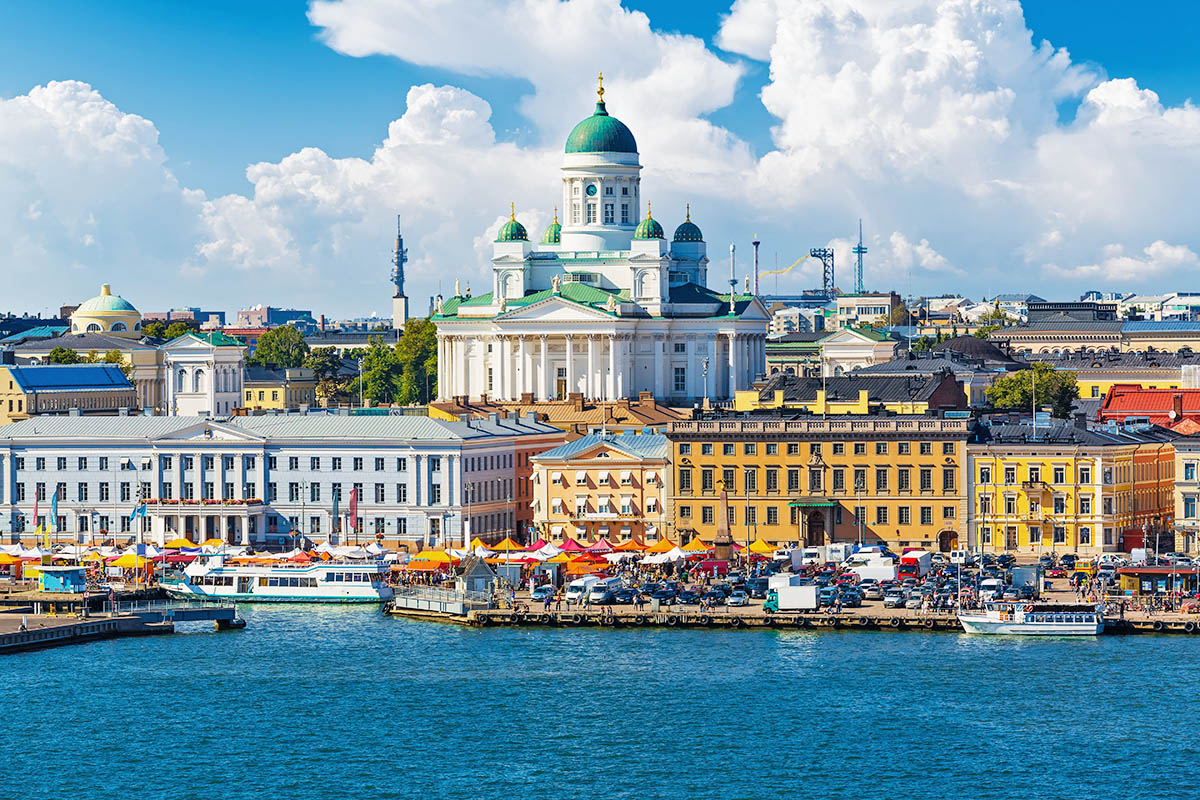
Helsinki’s Market Square has it all: fried vendace, meat pies (watch out for the seagulls—they’re bold!), and ferries to Suomenlinna island. On the edge of the square stands the statue of Havis Amanda, whose nudity caused quite the scandal among polite society back in the day. Just beyond her, guards in crisp uniforms stand watch outside the Presidential Palace.
A short walk away is Katajanokka, a neighbourhood straight out of an Jugens Style dream. Here, you can take a dip at the seaside Allas Sea Pool or spend the night in a former prison—now the stylish Hotel Katajanokka. The old jail cells have been transformed into cozy rooms, but wander the long central corridor and you can almost hear echoes of past inmates and forgotten stories.
Uspenski Cathedral – Faith on a Cliffside
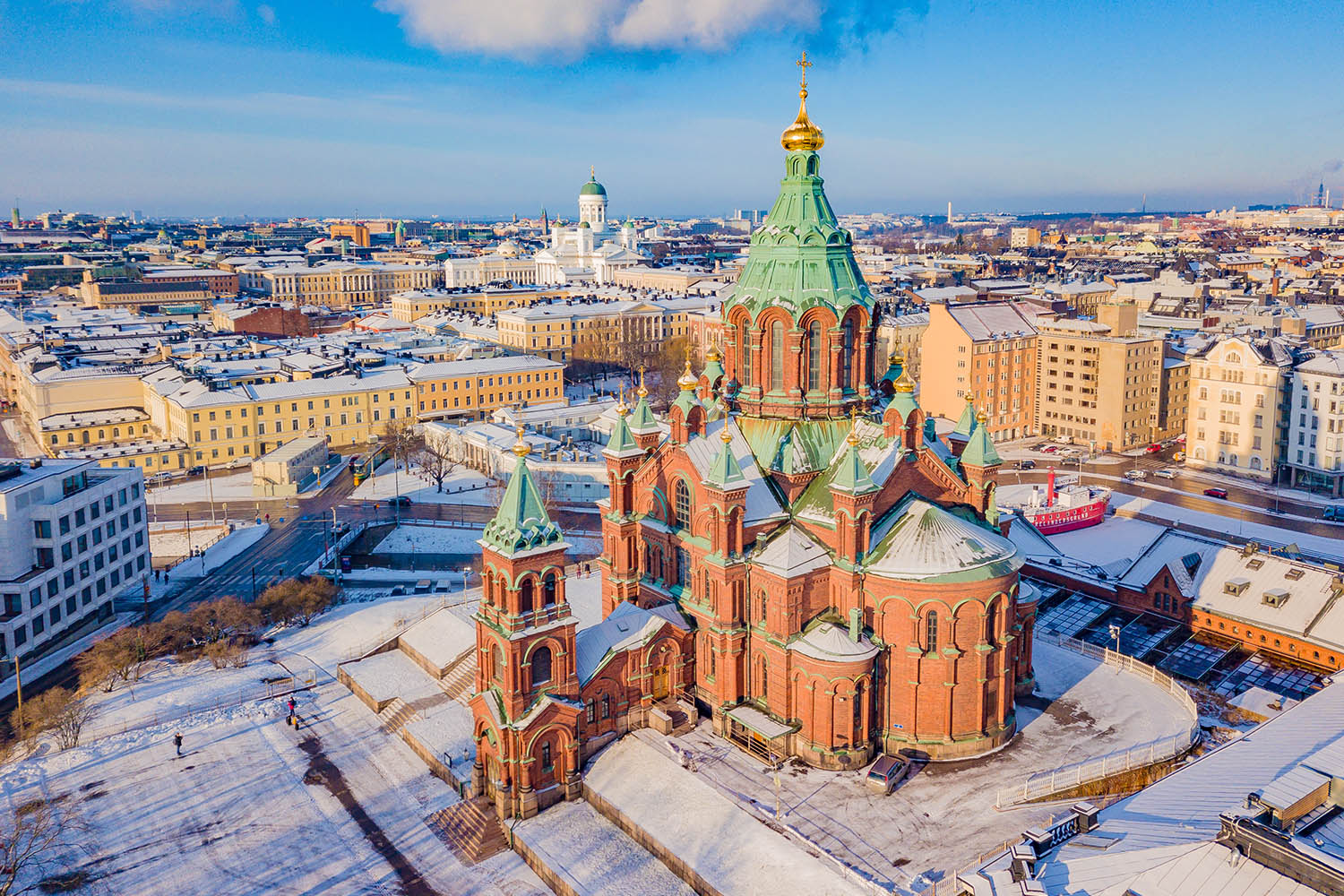
Perched high on a rocky bluff in Katajanokka, Uspenski Cathedral has been watching over Helsinki since 1868. With its red brick walls and golden onion domes, it’s the largest Orthodox church in Western Europe—and one of the city’s most striking landmarks. The bricks themselves came with a story: they were salvaged from the ruins of Bomarsund Fortress in Åland, destroyed during the side battles of Crimean War.
Step inside and you’ll find the air heavy with incense and quiet devotion. One of the cathedral’s most treasured relics is the wonder-working icon of the Virgin of Kozelshchyna, displayed in a glass case surrounded by thank-you offerings—crosses, jewelry, and tokens left by the faithful. The icon was dramatically stolen in 2010, only to be recovered after the thief returned to the scene, got caught, and revealed the hidden stash’s location.
Today, it draws both pilgrims and curious visitors alike, offering a glimpse into the spiritual heart of Helsinki’s Orthodox community—and one of the city’s more unusual crime stories.
Suomenlinna – Island Hopping Meets Fortress History
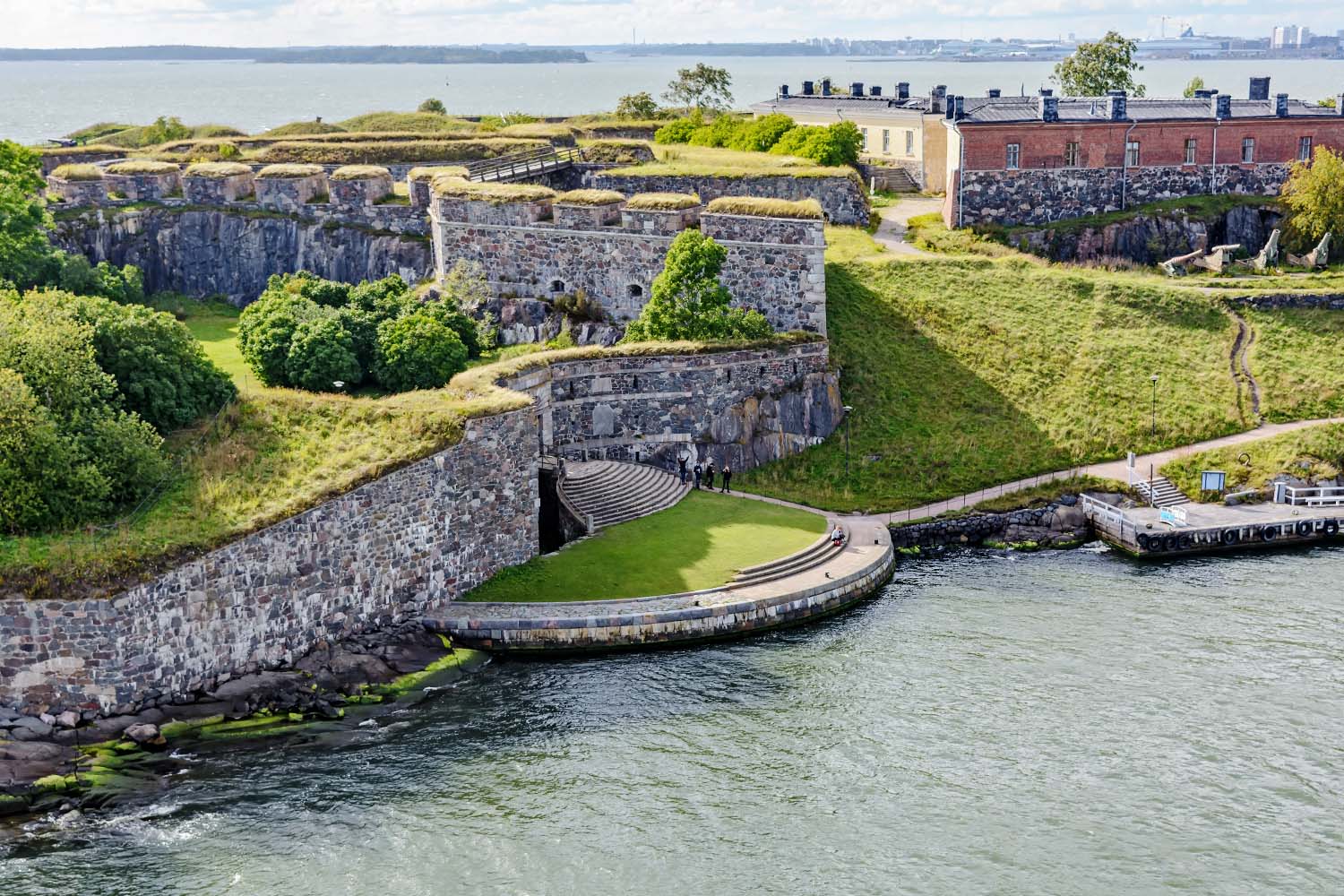
Just a short ferry ride from the Market Square lies Suomenlinna, the world’s largest sea fortress and Helsinki’s only UNESCO World Heritage Site. But don’t let the word “fortress” fool you—this isn’t some dusty old ruin. Suomenlinna is a lively blend of history, nature, and local charm, spread across a string of scenic islands.
Built in the mid-18th century to defend against naval threats, the fortress once served Swedish, Russian, and Finnish rulers in turn. Today, it’s a magical place to explore at your own pace. Wander through its atmospheric tunnels, climb ancient ramparts, or step aboard a real World War II-era submarine. Then sprawl out on the sun-warmed rocks with a picnic and let the sea breeze do its thing.
In summer, Suomenlinna feels like a cross between an open-air museum and a lazy island getaway. There are museums, cafés, a small grocery store for picnic supplies, and even a hostel if you fancy staying the night. Best of all? The public ferry from Market Square is included in a regular transport ticket—meaning your island adventure starts with the same card you’d use to hop on a tram.
A Walk Down Esplanade
Stretching from the bustling Market Square toward the heart of the shopping district, Esplanade is Helsinki’s most elegant promenade. Flanked by grand 19th-century buildings and lined with linden trees, the Esplanade—called “Espa” by locals—is a favorite spot for leisurely strolls, people-watching, and summer picnics. In warmer months, street musicians and open-air concerts fill the leafy park with music, while locals sprawl on the grass or sip coffee at the beloved Kappeli café.
Helsinki’s Shopping Heart – Aleksanterinkatu and Stockmann Department Store
Helsinki’s main shopping streets, Aleksanterinkatu and Pohjoisesplanadi, run parallel from Senate Square and the Market Square all the way to the legendary Stockmann department store. Together, they form the stylish spine of the city’s commercial district.
Stockmann isn’t just any department store—it’s a Finnish institution. Open since the 1920s and now the largest of its kind in the Nordics, it has long been the go-to place for everything from designer fashion to kitchenware, Finnish treats to international labels. Locals simply call it Stokka.
Outside the store’s main entrance you’ll find two iconic Helsinki landmarks: the Stockmann clock, a classic meeting point for generations of Helsinkians, and the Three Smiths Statue, another popular rendezvous spot. Come December, Stockmann’s holiday windows are a seasonal spectacle, drawing families and wide-eyed children for a peek into a miniature Christmas world.
Aleksanterinkatu itself is lined with handsome historic buildings, but none more striking than the Pohjola Insurance Building on the corner of Mikonkatu. This Jugend Style masterpiece is adorned with dramatic stone figures and intricate decorative details—a fairy tale in granite. Keep your eyes up as you stroll: Helsinki’s architecture often rewards those who look above the shop windows.
Sleep, Sweets, and a Hint of Eavesdropping – Hobo Hotel and Karl Fazer Café
Tucked between Aleksanterinkatu and Pohjoisesplanadi on charming Kluuvikatu, Hobo Helsinki is a stylish and well-located place to stay—perfect for exploring the city center on foot. And right across the street? A true Helsinki classic: Karl Fazer Café, the birthplace of Finland’s most beloved chocolate and confectionery brand.
It all started here in 1892, when Karl Fazer opened his original French-Russian pastry shop on this very spot. Over time, the little café grew into a national institution, with its signature blue-wrapped chocolate bars becoming part of the Finnish identity.
The current building dates from the 1930s and reflects the clean lines of Nordic classicism. Inside, the café is a feast for both eyes and taste buds. One wall still displays a striking modern mural by Hjalmar Hagelstam—Karl Fazer’s son-in-law—and the domed ceiling has an unexpected acoustic trick: thanks to its shape, you can sometimes hear conversations from across the room as clearly as if they were happening at your own table. Come for the pastries, stay for the spy vibes.
Oodi – The Library of the Future (With Basketball)
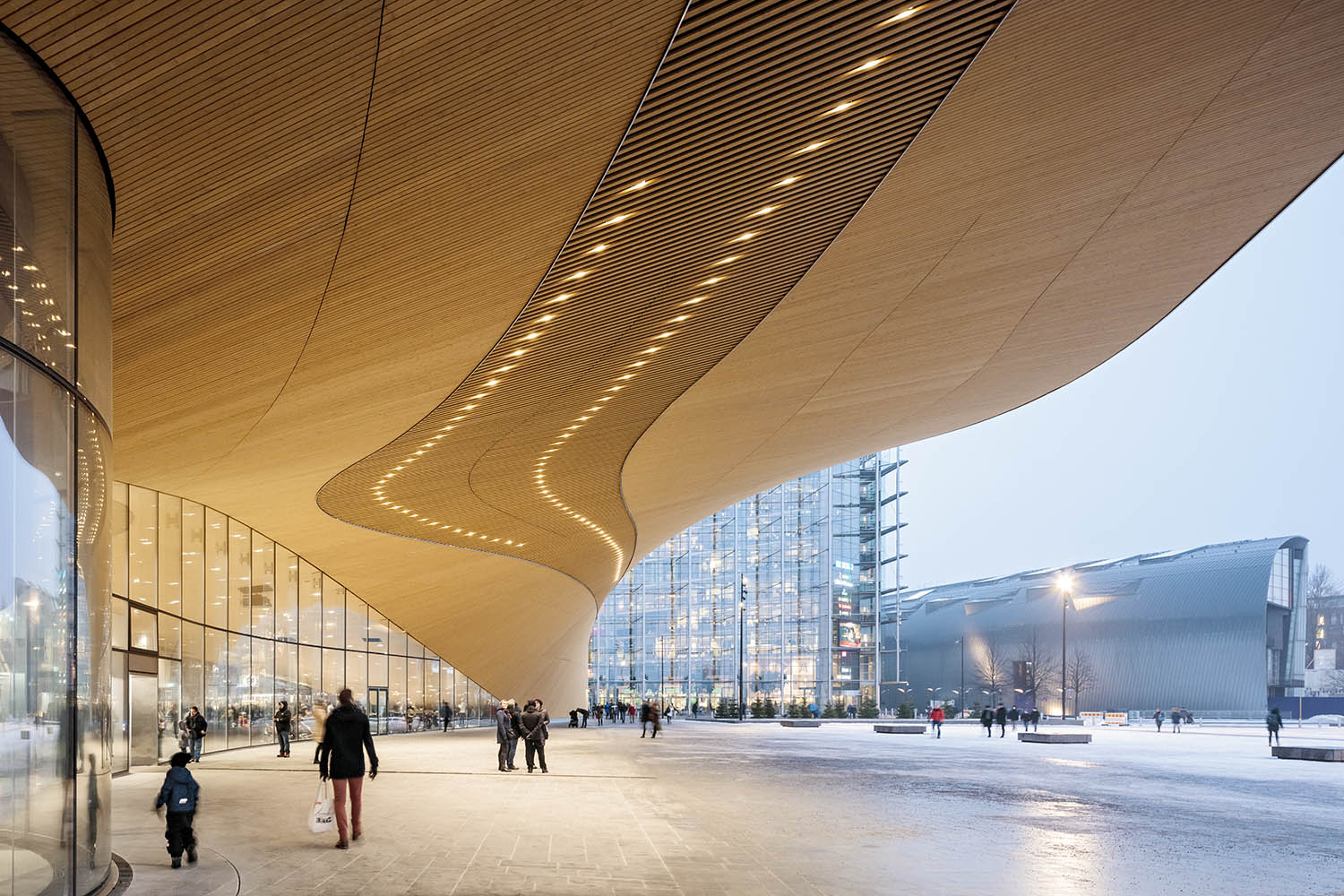
Standing proudly across from the imposing Parliament House, Oodi is perhaps Helsinki’s most beloved new building—and it’s not your average library. Designed to stretch the very definition of what a library can be, Oodi is a place where books meet makerspaces, creativity, and community.
Here, you can solder electronics, sew with a machine, 3D print your next invention, or record and edit music and video. There’s even a large-format printer that lets you print posters wider than a meter. Beyond books, music, and board games, you can borrow… a basketball. Why? Because right outside, there’s a streetball court waiting.
Oh, and did we mention it’s beautiful? With sweeping wooden curves and light-filled interiors, Oodi is a modern architectural gem—and a symbol of how seriously Finland takes both design and free access to knowledge.
Temppeliaukio Church – Faith Meets Futurism in the Rock
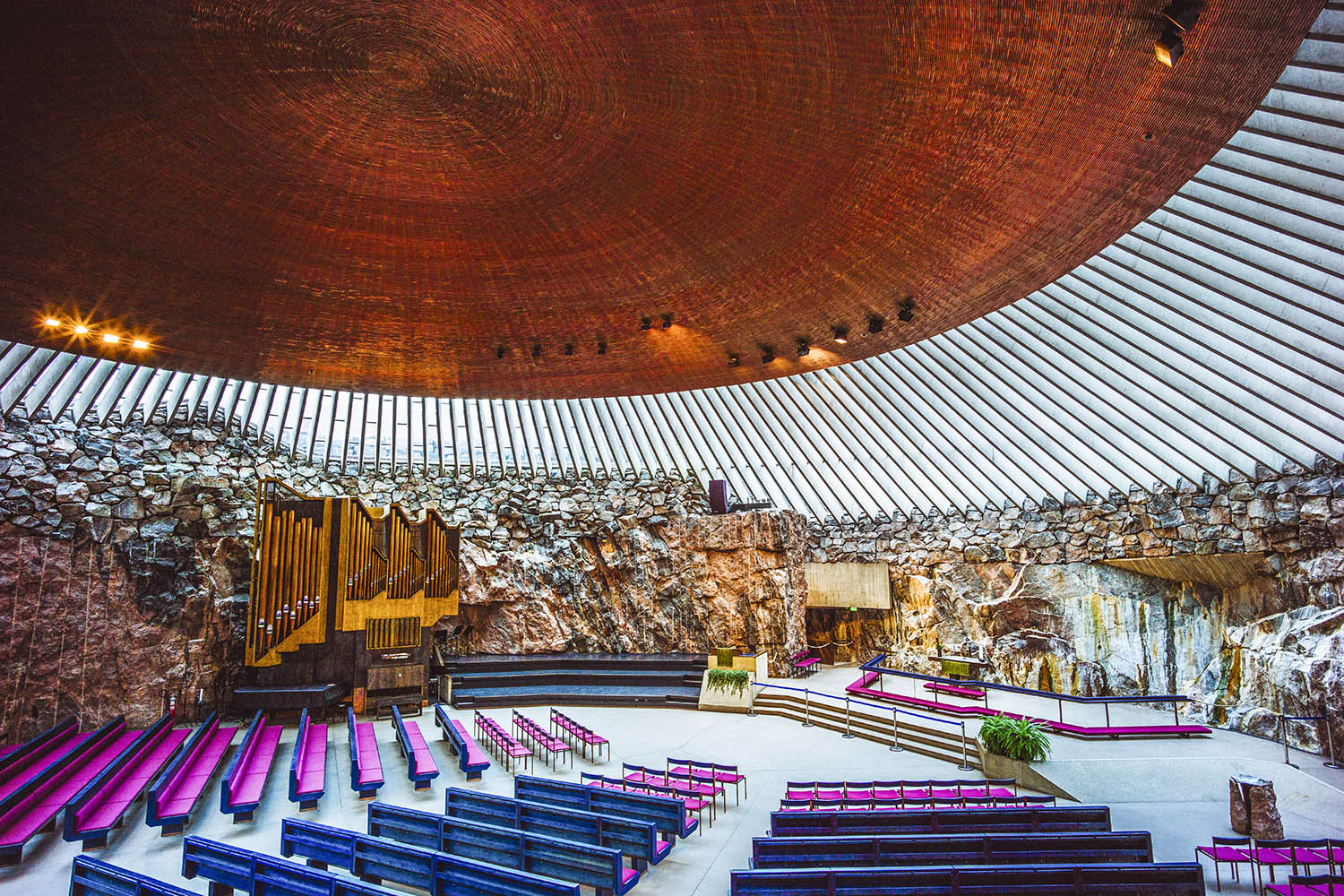
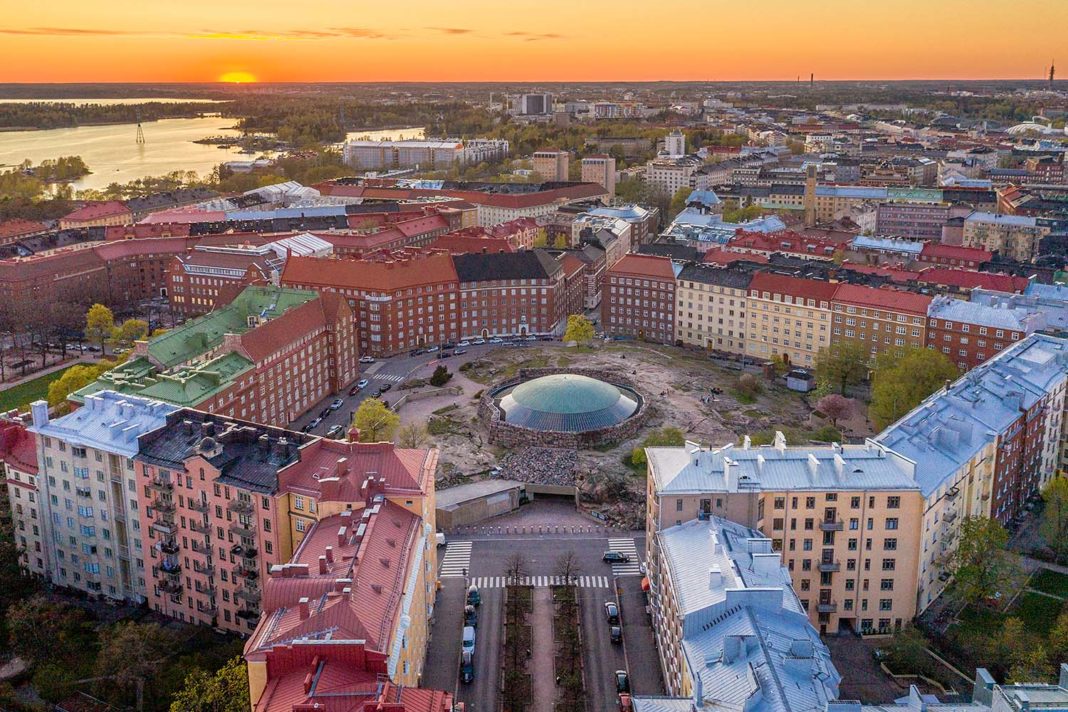
One of Helsinki’s most iconic churches is also its most unconventional: Temppeliaukio Church, carved directly into solid bedrock in the charming district of Töölö. When construction began in the late 1960s, the press wasn’t kind—critics dubbed it a “devil-defense bunker” and questioned the cost, especially during a time of famine and civil war in Nigeria.
But the result? One of Finland’s most stunning modern churches and a must-see for visitors. Rough, unpolished stone walls rise naturally from the ground, while a copper-threaded dome floats above them like a halo. The overall effect is something between a sci-fi temple and a Nordic Pantheon—raw, reverent, and deeply atmospheric.
The architects behind it, brothers Timo and Tuomo Suomalainen, never again reached the same level of international recognition. But with Temppeliaukio, they created a space that still leaves people speechless—and occasionally teary-eyed—decades later.
Hietaniemi – Where the Beach Meets the Burial Ground
Helsinki’s most unexpected pairing? A sunny beach and a national cemetery—side by side. At Hietaniemi, both the living and the departed get their moment of reverence: on the beach (Hietsu, as locals call it), sunbathers worship golden rays and youthful vitality; just across the way, the solemn paths of Hietaniemi Cemetery pay tribute to the great figures of Finnish history.
Hietsu is Helsinki’s answer to Venice Beach or Copacabana—a lively stretch of sand that comes alive on hot summer days with swimmers, volleyball matches, and the occasional impromptu guitar solo.
The cemetery, by contrast, is a peaceful and fascinating place to wander. This is where Finland buries its legends: from Field Marshal Mannerheim to architect Alvar Aalto. The gravestones range from grand and moving to oddly charming. And for many international visitors, the main destination is the grave of Tove Jansson, beloved creator of the Moomins—a quiet pilgrimage spot for fans from around the world.
The Sibelius Monument – Pipes, Portraits, and a Peculiar Café
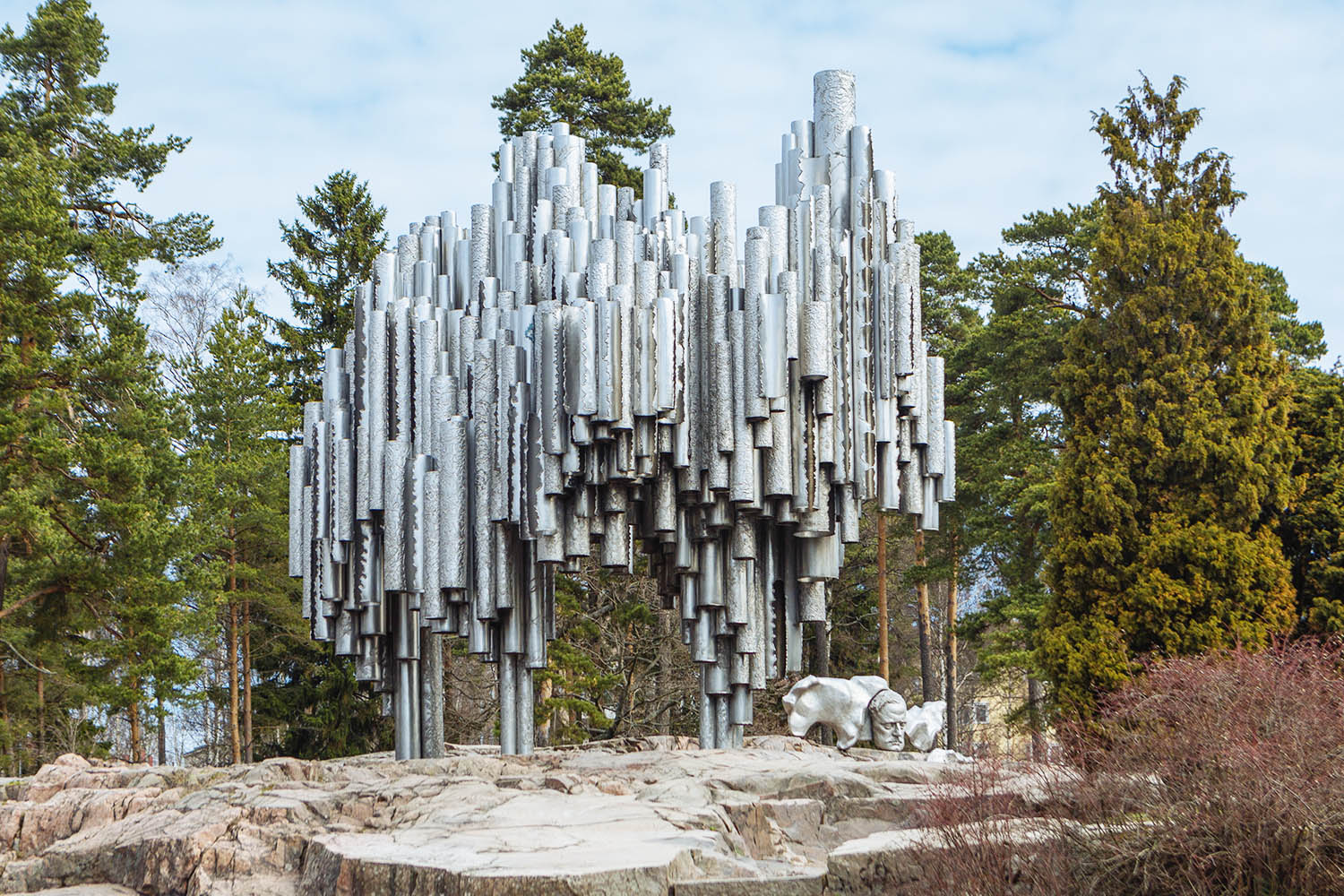
Tucked into a leafy corner of Töölö, the Sibelius Monument is arguably the best statue in Helsinki—and quite possibly the most successful piece of public art in all of Finland. Composed of over 600 steel pipes welded together like the dream of a surrealist organ builder, the monument is strikingly modern yet somehow captures the spirit of composer Jean Sibelius with poetic clarity.
Created by sculptor Eila Hiltunen, the piece caused quite a stir when it was unveiled in 1967. It was so abstract that people weren’t sure if it honored Sibelius or alien life. The public outcry was loud enough that a traditional bronze bust of the composer was later added beside it—just to be sure everyone got the point.
Nearby, you’ll find the Rowing Stadium, where you can rent a boat and paddle along the shore, and the charming Café Regatta—a small red wooden cottage that’s part storybook, part slightly scruffy living room. It’s wildly popular with both locals and tourists, offering cinnamon buns, campfire sausages, and front-row seats to the sea.
And then there’s the sign on the wall, addressed politely but firmly to potential thieves:
“Dear thief. We do not sell beer, cider, or cigarettes. Today’s cash has been safely deposited. Please don’t trouble yourself unnecessarily. Thank you.”
Classic Finnish hospitality—with a side of dry humor.
Kallio – Grit, Gigs, and a Whole Lot of Character
Kallio is Helsinki’s former working-class neighborhood turned bohemian enclave. Cozy and a little rough around the edges (in the best way), it’s now home to students, artists, night owls, and anyone who enjoys affordable eats and bars with soul. Every corner seems to offer a pub, a kebab shop, or a hole-in-the-wall restaurant with personality to spare.
One of the district’s crown jewels is the legendary Pub Sirdie. Established in 1966, this tiny dive bar hasn’t changed much since—and that’s exactly the point. With its vintage jukebox spinning Finnish rock and international hits from the ’60s and ’70s, and its walls covered in timeworn memorabilia, Sirdie oozes old-school charm. It’s so beloved that when the bar was put up for sale in 2018, more than a thousand locals joined forces to buy it, forming the “Friends of Sirdie” collective to keep the spirit alive. A cultural icon? Absolutely. A little rough? All the better.
Kallio also has its own curiosities. One of them is a tiny porn shop called Aikuisten Lelukauppa which translates to Adult’s Toy Store—famously once staffed by Ville Valo before he became an international rock star. The store, owned by his father, sells sex toys alongside HIM-branded souvenirs for the fans who still make the pilgrimage.
And then there’s Kallio Church, a majestic Jugend Style landmark that towers over the neighborhood. Its bell tower chimes out a melody composed by Jean Sibelius every day at noon and 6 p.m.—a rare blend of daily ritual and national pride. If you’re up for the climb, the view from the top is worth every step.
Puu-Vallila – Helsinki’s Charming Wooden District
Tucked behind Kallio and Sörnäinen, Puu-Vallila is Helsinki’s most picturesque neighborhood—a peaceful pocket of wooden houses that time (and developers) nearly forgot. Once upon a time, this is what many of the city’s working-class districts looked like, until modernization swept through. In the 1970s, Puu-Vallila was nearly demolished to make way for progress, but a passionate grassroots movement by local residents saved it from the wrecking ball.
Today, the colorful wooden homes, charming gardens, and unhurried pace make it a favorite spot for photographers, artists, and anyone in need of a moment of calm.
When you’ve admired enough gingerbread trim and picket fences, stop by Pikku-Vallila, a beloved local bar once frequented by Helsinki’s own hard-living poet, Arto Melleri. It’s a cozy place where the beer is cold and the stories long.
Just around the corner is CheapSleep Hostel Helsinki, a budget-friendly place to stay—with a front-row seat to one of the city’s most photogenic neighborhoods.
Hipster Central: Punavuori and the Helsinki Design District
If Helsinki had a Brooklyn, it would be Punavuori. Once a gritty working-class neighborhood, today it’s the beating heart of Helsinki’s creative scene—equal parts laid-back and style-forward. Locals affectionately call it Rööperi, a nickname that hints at the area’s edgier past, but these days it’s more lattes and linen shirts than leather jackets and liquor stores.
Punavuori is packed with indie boutiques, quirky cafés, vintage shops, tiny art galleries, and natural wine bars. Want to sip your coffee in a record store? Shop for minimalist ceramics made by a local artist? Try on Scandinavian fashion that hasn’t made it to global runways yet? This is the place.
The neighborhood also anchors the Helsinki Design District, a vibrant cluster of over 200 creative businesses, including interior design studios, clothing labels, antique shops, and artisan workshops. It’s not so much a tourist attraction as a lifestyle zone: you’re just as likely to stumble across a pop-up exhibition or design talk as you are to find a beautifully curated store selling things you didn’t know you needed—but now absolutely do.
Wander the streets of Uudenmaankatu, Fredrikinkatu, and Iso Roobertinkatu, and let your curiosity guide you. Punavuori may be Helsinki’s trendiest neighborhood, but it doesn’t try too hard—its cool comes naturally.
Elegant Eira – Jugend Charms and Seaside Strolls
Side by side, the neighborhoods of Eira, Ullanlinna, and Kaivopuisto form Helsinki’s most exclusive and picturesque residential area. Think leafy streets, colorful Art Nouveau buildings, seaside promenades—and the quiet confidence of old money.
The crown jewel here is Huvilakatu, a street so photogenic it looks like it was designed by a team of architects and Instagram influencers working in perfect harmony. Lined with pastel-toned jugend-style townhouses, it’s arguably the most beautiful street in the city. At its end, on the corner of Laivurinkatu and Tehtaankatu, stands the Eira Hospital—a building that looks more like a whimsical castle than a place for checkups.
You’ll find stunning architecture scattered throughout the district, but the real gem is Kaivopuisto, the grand seaside park that Helsinki locals love all year round. In early spring, the frozen sea sparkles under bright sun, and in summer, the park fills with sunbathers, joggers, and dog-walkers. The high point of the social calendar? May Day (Vappu), when half the city gathers here for champagne-fueled picnics on the hill crowned by a tiny observatory dome.
Classic restaurants still hold court in Eira. There’s Sea Horse, affectionately known as Sikala (“the Pigsty”), a no-frills institution famous for its fried herring—jazz legend Dizzy Gillespie once ate not only his own plate, but his companions’ portions too. Nearby, next to the imposing Russian Embassy, you’ll find Saslik, one of the last surviving Russian restaurants in town, where heavy drapes, caviar, and vodka flow freely.
Need a break by the water? Cafe Ursula and Cafe Carusel offer unbeatable seaside views with your coffee—year-round, weather permitting or not.
Did you like this article? If you’re planning a trip to Finland, please book your hotel or rent a cabin or rental car by clicking on our affiliate links. We get a small commission, but you don’t pay any extra. Thanks for your support!