
Before there were hashtags or high-res drone shots of Lapland, Akseli Gallen-Kallela—the artist who gave Finland its visual mythos. He painted our heroes, our lakes, our long silences.
Born in 1865 and originally named Axel Waldemar Gallén (he Finnicized it later—very in vogue at the time), he was one of those rare types who could blend epic and intimate, fantasy and realism. He painted heroes, but also his children.
He was Finland’s mirror, myth-maker, and sometimes wilderness prophet. He made the Kalevala visible. He captured the magic of pine needles and storm clouds. He gave form to the Finnish soul before we were even sure what it looked like.
He didn’t just paint. He built. He carved. He embroidered. He designed the military medals for the country and the furniture of his own house. At times he went full hermit. At other times, he hobnobbed with the Paris art crowd. He could sketch his drunken artist friends as in the painting Symposium, and skin an elk the next moment. That, dear reader, is range.
No wonder he started to be called our national artist already in his lifetime. So where can you go today to catch a bit of his magic?
Gallen-Kallela Museum – His Castle of Dreams
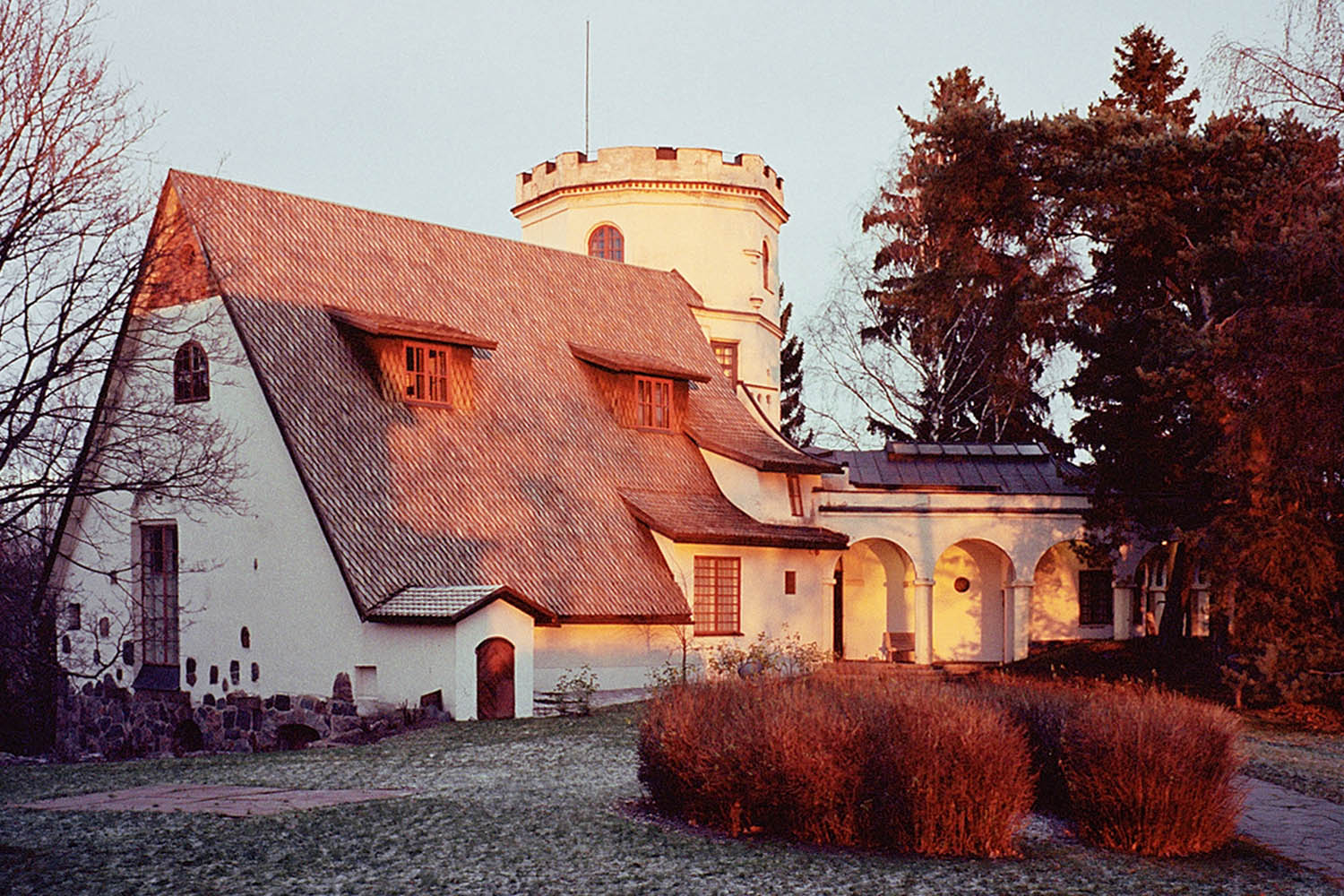
Where: Tarvaspää, Espoo (just in the outskirts of Helsinki)
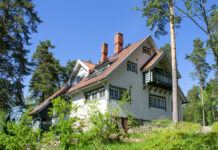
If national romanticism had a headquarters, this would be it. The Gallen-Kallela Museum, housed in the artist’s self-designed stone villa, sits like a turreted daydream by the sea. Built in 1913, it was his home and studio—a creative fortress where he painted, hosted artist friends, and reimagined Finland one canvas at a time.
Inside, you’ll find paintings, sketches, letters, furniture, and the kind of quiet atmosphere that makes you wonder if Väinämöinen himself might be soaking in the light upstairs. Temporary exhibitions keep things fresh, but the soul of the place is unmistakably Gallen-Kallela.
Ateneum Art Museum
Where: Helsinki
For those who want to meet Gallen-Kallela in full myth-making mode, Ateneum is where it happens. Here you’ll find his masterpieces—Lemminkäinen’s Mother, Kullervo’s Curse, and other epic scenes drawn from the Kalevala, Finland’s national epic.
These paintings aren’t just stories—they’re emotions in fur cloaks, with eyes that stare right through you. His Lemminkäinen’s Mother (1897) is particularly haunting: a grief-stricken mother retrieving her son’s dismembered body from the Tuonela river. It’s tender, mythic, and devastating all at once.
The Ateneum isn’t just a museum. It’s a national mirror. And Gallen-Kallela’s works are some of the most unforgettable reflections in it.
Turku Art Museum
Where: Turku
Turku’s Art Museum is a beautiful granite castle of culture—and home to one of Gallen-Kallela’s most powerful works: The Defense of the Sampo (1896). If you only vaguely remember the Kalevala from school, the Sampo is the mythological object everyone wants to steal: a magical mill that produces riches without end.
Gallen-Kallela’s painting captures the chaotic climax of the tale, with sky-tossed waves, battling heroes, and the raw energy of legend. It’s big, bold, and looks like it might start moving if you stare long enough.
Juselius Mausoleum
Where: Pori in Western Finland
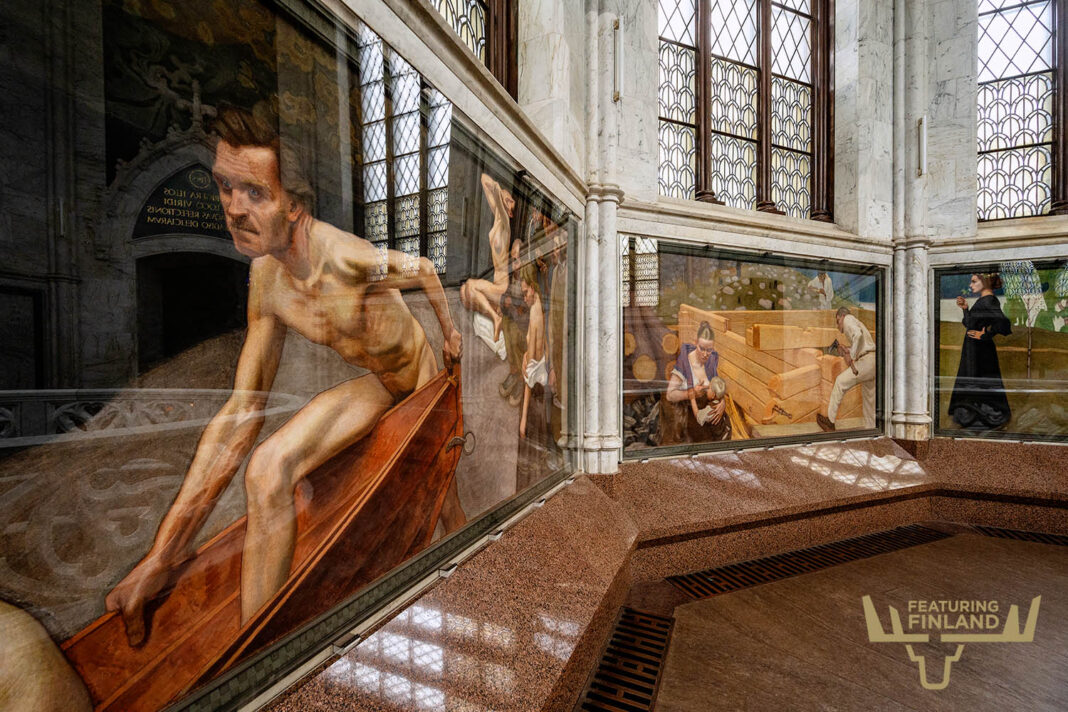
Hidden among the trees of Käppärä Cemetery in Pori stands something rare: the Juselius Mausoleum, the only one of its kind in the Nordics. Part chapel, part crypt, part national artwork, it was built by industrialist F.A. Juselius for his daughter Sigrid, who died of tuberculosis at just 11.
Determined to create a worthy tribute, Juselius enlisted architect Josef Stenbäck and Akseli Gallen-Kallela, whose frescoes fill the space with quiet power. Depicting the seasons and the life of a Finnish peasant, the paintings are laced with symbols—light and shadow, growth and decay, always with death quietly nearby. For Gallen-Kallela, it was also personal: he had recently lost his own daughter, and painted his grief into the walls, even including himself in the River of Death.
The frescoes were later destroyed by fire, and it was Gallen-Kallela’s son, Jorma, who restored them from his father’s sketches—only to die in the Winter War, just months after finishing the work.
Did you like this article? If you’re planning a trip to Finland, please book your hotel or rent a cabin or rental car by clicking on our affiliate links. We get a small commission, but you don’t pay any extra. Thanks for your support!