

Carl Gustaf Emil Mannerheim was no ordinary statesman. He rode on horseback across Asia, drank tea from a silver tray, and preferred to sleep in a field bed. Surprisingly, Finland offers many places where you can follow in his footsteps – from the grand halls of his childhood home to the Marshal’s personal railway carriage.
Louhisaari Manor, Askainen
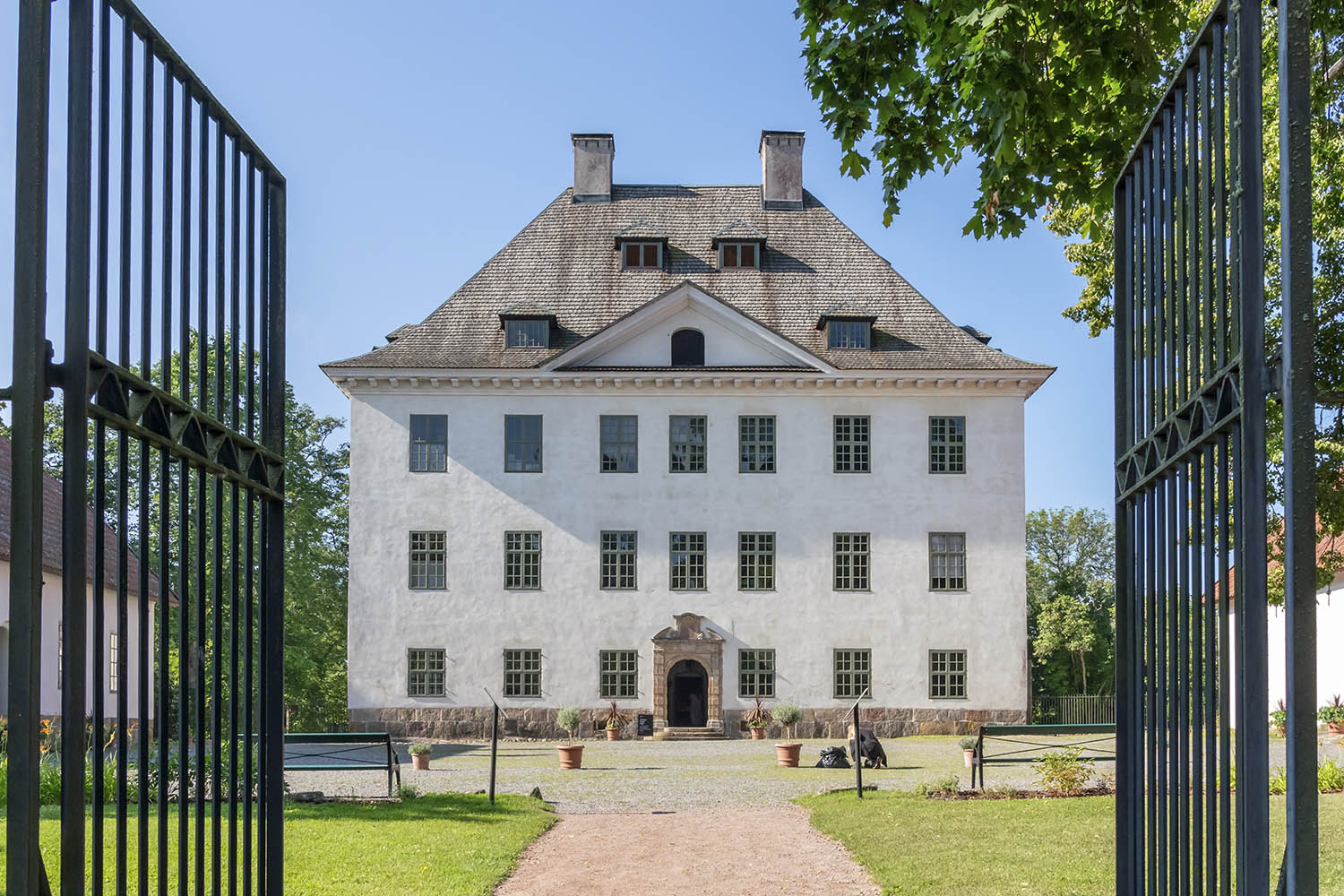
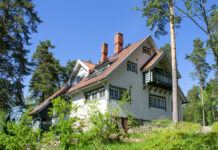
Mannerheim’s story begins at Louhisaari Manor in Southwest Finland. Completed in 1655, this Baroque manor was owned alternately by the Fleming and Mannerheim families. The Marshal was born there in 1867, on the third floor, and his childhood was filled with mischief – including famously falling from the hayloft of the barn.
The family’s life collapsed when his father gambled away their inheritance and fled to Paris with his mistress. His mother died of shame. Carl Gustaf Emil was only 13 years old. The family’s wealth, home, and reputation were gone, and he was left in the care of his aunt and grandparents.
Mannerheim would go on to become an officer in the Russian Tsar’s Imperial Guard, an explorer, commander-in-chief during the Finnish Civil War, and supreme commander during the Winter War. After his death, so many funds were raised for an equestrian statue in his honor that Louhisaari Manor was purchased and turned into a museum at the same time.
RUK Main Building, Hamina
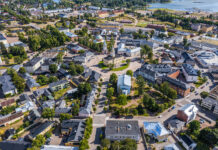
In the heart of Hamina stands the impressive main building of the Finnish Defence Forces Reserve Officer School, or RUK. During the era of Russian rule, it housed the Hamina Cadet School, a military academy of the Russian Empire that trained officers for the needs of the Grand Duchy of Finland. Its most famous student was Carl Gustaf Emil Mannerheim.
Mannerheim was sent to the cadet school at age 15, just over a year after the death of his mother. It was a strict, closed boarding school where discipline was rigid and uncompromising. Mannerheim struggled to fit in, a once-wealthy noble boy who couldn’t adapt to the harsh rules or the pecking order among students.
He was determined and proud, but not especially adaptable. He rebelled against the rules, receiving 25 disciplinary punishments during his first three years. He wrote to his brother expressing his frustration, saying he’d rather be “a street sweeper in any godforsaken hole than a cadet in Hamina.”
The final straw came when, at 18, Mannerheim went AWOL on Easter night in 1886. He visited a tavern and spent the night in company that the school’s disciplinary board described as “of less than good repute.” The incident was labeled in official records as a “moral lapse” and “degrading debauchery” terms some have interpreted as veiled references to possible homosexual activity. While Mannerheim was never officially accused of homosexuality, such suspicions in that era could have had serious consequences.
Mannerheim was expelled from the school. But while Hamina closed its doors, the world opened up. He applied to, and was accepted into the Tsar’s Chevalier Guard officer school in St. Petersburg, where his military career truly began.
Mannerheim Statue, Tampere
Tampere might not be the first place you’d expect to find a statue of Mannerheim. During the Finnish Civil War, the city was a stronghold of the Red forces and the site of some of the bloodiest battles. But that’s exactly why the statue is there not downtown, but on the edge of the forest on Leinola Hill, the very spot where Mannerheim led the White offensive in 1918.
The Marshal stands in a fur hat, pipe in hand, with a stern expression on his face. The statue is based on a painting from the same year by Eero Järnefelt.
House of the Four Winds, Hanko
Hanko’s most historic café is the House of the Four Winds (Neljän tuulen tupa), and among its former owners was none other than Marshal Mannerheim. Before becoming a café owner, he had already lived a remarkable life: he had served in Tsar Nicholas II’s Imperial Guard, ridden across Asia on a covert reconnaissance mission, led the White forces to victory in the Civil War, and acted as the first Regent of independent Finland.
By the late 1920s, Mannerheim was in his fifties and without official duties perhaps wondering if his greatest deeds were behind him. He spent his summers at his villa in Hanko, next to a lively café called Café Africa, where customers enjoyed bootleg liquor despite Prohibition laws. Tired of the noise and rowdiness, Mannerheim bought the café, changed its name, imported a tea set from France, and ran the place for six years until he was called back to public service as Chairman of Finland’s Defense Council.
The carefree 1920s gave way to a darker, more ominous decade.
The House of the Four Winds still stands on its own little peninsula, three kilometers from downtown Hanko. The interior has been restored to reflect the Marshal’s era, even the ceiling lamps are original.
Mannerheim Museum, Helsinki
In the prestigious Kaivopuisto district of Helsinki stands a home that never lost the spirit of its owner. Carl Gustaf Emil Mannerheim lived in this stone villa from 1924 to 1951. Today, it serves as the Mannerheim Museum, with rooms preserved just as the Marshal left them.
The walls are adorned with hunting trophies, including a painting by Akseli Gallen-Kallela from an African safari, depicting a leopard shot by Mannerheim. In the bedroom, his morning slippers rest beside a simple, low field bed the kind he preferred to sleep in, even as a war hero.
Muisti Centre of War and Peace, Mikkeli
It’s December 1939. Shells are exploding, and Soviet troops are advancing on the front at Summa. But when you remove the virtual reality headset, peace returns. The Muisti Centre of War and Peace in Mikkeli is a striking experience, one that focuses more on war than peace. In fact, it could just as easily be named the Winter War Museum, a title that might attract even more international visitors.
The museum is located in a former school building that served as the Finnish army’s headquarters during the war. One of the rooms has been preserved as Mannerheim’s wartime office. His round-rimmed eyeglasses rest on the desk, and his armchair is the very one prescribed by his personal doctor. During the war years, the Marshal often suffered from health issues: gout, rheumatism, and dental infections reminded him of his age and mortality.
At the Mikkeli railway station, you can also see Mannerheim’s personal railway sleeping car, but only on one day each year: his birthday, June 4th.
Mannerheim’s Saloon Car, Sastamala
Mannerheim’s staff train dining car is on display at the Kiskokabinetti railway museum in Sastamala. This particular carriage holds unique historical significance it was here that Adolf Hitler visited Mannerheim on his 75th birthday. At the time, Finland was receiving German support in its fight against the Soviet Union.
The conversation between the two leaders was secretly recorded, making it the only known audio of Hitler speaking in a relaxed setting. In it, he praises the Finnish people and describes himself as a “nature lover and artistic soul.”
Mannerheim Equestrian Statue, Helsinki
Equestrian statues are the crowning monuments to national heroes. For a long time, Finland had none. We had no king or warlord of our own to immortalize. But after World War II, it was decided that Helsinki needed a statue of Mannerheim on horseback.
The task went to sculptor Aimo Tukiainen, who worked day and night for five years under intense pressure. The statue had to be both realistic and artistically ambitious, a nearly impossible brief. When it was finally unveiled in June 1960, over 50,000 people gathered for the ceremony. The atmosphere was solemn, though none of the speeches mentioned the sculptor himself.
In the 1990s, the statue returned to the spotlight when the Kiasma Museum of Contemporary Art was planned next to it. Critics claimed the museum would disrespect the Marshal. Tukiainen even took the matter to court. In hindsight, the outrage seems unnecessary: today, Mannerheim rides with dignity in front of the museum no longer isolated on a patch of wasteland.
Hietaniemi Cemetery, Helsinki
Mannerheim’s final resting place is Hietaniemi Cemetery in Helsinki, the burial site of many other notable Finns, from architect Alvar Aalto to author Mika Waltari. Mannerheim was laid to rest in 1951 with full state honors.
His grave is marked by a simple yet dignified monument designed by sculptor Wäinö Aaltonen, whose work also includes the famous statue of runner Paavo Nurmi. Atop the red granite slab lies a bronze relief featuring the Finnish coat of arms and Mannerheim’s marshal’s baton.
The stone chosen for the monument beautifully symbolizes Mannerheim’s two homelands: Finland and Russia. The same red granite from Virolahti was used for many Tsarist-era monuments in St. Petersburg, including the massive column honoring Alexander I on Palace Square. At 25.5 meters tall, it remains the tallest single-piece stone monolith in the world.
Did you like this article? If you’re planning a trip to Finland, please book your hotel or rent a cabin or rental car by clicking on our affiliate links. We get a small commission, but you don’t pay any extra. Thanks for your support!