

There aren’t many towns in the world built in a perfect circle. Hamina is one of the rare few. Its street plan is like a geometric fever dream: at the center, a round town square, with eight radial streets shooting outward, connected by two circular ones. The whole thing is wrapped in a star-shaped fortress. It’s not just pretty — it’s Renaissance-level idealism, carved into city form.
This fortress town rose where east meets west. Construction on Hamina’s defenses began in 1722 under Swedish rule, fueled by fear of Peter the Great. But when the Russians marched in two decades later, the fortress still wasn’t finished — and surrendered without a fight.
By 1743, the Treaty of Turku moved the Russian border to the nearby Kymi River. Hamina and neighboring Kotka became part of Russia 70 years before the rest of Finland did in 1809. Hamina became a border fortress — a preview of autonomous Finland under Russian rule, where Orthodox domes stood beside Lutheran steeples and Swedish was still the language of administration.
In summer, Hamina marches to a military beat
The Hamina Tattoo, a beloved international military music festival, takes over the town each summer. The rest of the year? You might have the place almost to yourself. But don’t be fooled — Hamina’s charming old center is very much worth a visit.
Hamina’s circular core: Raatihuoneentori
The beauty of Hamina’s layout? It’s nearly impossible to get lost. Wander down almost any street, and odds are, you’ll end up right back where you started. The only other town with a similar star-and-circle layout is Palmanova, in northeastern Italy near the Slovenian border.
Both were built with the same utopian idea: a city of symmetry, order, and cosmic beauty — the universe in miniature. During the 15th and 16th centuries, Italian architects dreamed of ideal cities to counter the messy chaos of medieval towns. The result? Grids, circles, open sightlines, and star-shaped fortresses — designs as beautiful as they were practical.
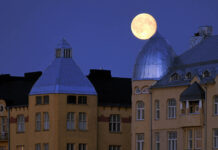
Hamina’s own star has a center: the round main square, Raatihuoneentori, crowned with a neoclassical town hall designed by Carl Ludvig Engel. Surrounding it are two churches — one a pale-blue Lutheran temple (also by Engel), the other a vibrant orange Orthodox church designed by Louis Visconti, the same French architect behind Napoleon’s tomb in Paris.
Tove Jansson’s murals — and a tiny Moomin
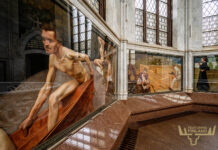
Inside the town hall’s council chamber hang sweeping murals by Tove Jansson, better known as the creator of the Moomins. Painted originally for a hotel ballroom, they feature crashing waves, gallant officers, elegant ladies — and yes, even a sneaky little Moomintroll, hiding next to her signature. Why Hamina hasn’t advertised these to Moomin-mad Japanese tourists is a mystery.
City Museum — and the Empress’s chamber
The Hamina City Museum is housed in an 18th-century building that has worn many hats: home, customs house, bakery, tailor shop. In 1783, it hosted Russian Empress Catherine the Great and Swedish King Gustav III, who met here to patch things up between their nations. She got a 101-gun salute and a carpet of roses; he arrived late with a broken arm.
The peace talks? Not a smashing success — five years later, Gustav was at war with Russia. The museum’s highlight is the “Catherine’s Chamber,” styled to recreate their royal meeting.
The Merchant House Museum — a walk into the 1900s
This museum takes you back to early 20th-century merchant life in a Finnish-Russian trading town. It includes a full block: the shop itself, the merchant and tenant family homes, and outbuildings where blacksmiths and craftsmen once worked.
The Officers’ School — where Mannerheim flunked out
Military training has deep roots in Hamina. Today it’s home to Finland’s Reserve Officer School (RUK), which trains future officers for the Army, Navy, and Air Force. The grand main building stands in the center of town, fronted by a monument to fallen officers.
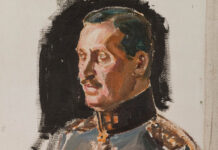
Before RUK, the building hosted a Russian cadet school. Its most infamous dropout? Marshal Mannerheim himself — dismissed after falling in with the wrong crowd on a legendary night out.
Walk the Hamina Fortress
On the edge of town you’ll find one of Hamina’s old gatehouses. Back in the day, visitors handed over passports (and weapons) to the guards here. Nearby is a well-preserved earthen bastion wall. Follow the path and you’ll reach the Central Bastion — the best spot to take in Hamina’s star-shaped defenses. In summer, this bastion also hosts the Hamina Tattoo’s main concerts under a massive tent.
Side trip: Salpalinja — Finland’s Great Wall
30 kilometers east of Hamina lie two fascinating WWII defense museums: the Virolahti Bunker Museum and the Miehikkälä Salpa Line Museum. They showcase Finland’s greatest wartime construction — the 1,200-kilometer Salpalinja, built to stop another Soviet invasion.
No battles were fought there, but its existence alone may have prevented one.
Which museum to visit?
Virolahti is more theatrical: a costumed guide known as “Major” and a forest trail straight out of The Unknown Soldier.
Miehikkälä is more authentic: raw, informative, and surrounded by real tank traps and bunkers.
Both are great — it just depends on whether you want realism or family-friendly fun.
Staying in Hamina
Accommodation is limited in the town center — right now, Spa Hotel Hamina is your best bet. For more options, consider staying in nearby Kotka, just a short drive away.
Getting to Hamina
Hamina’s bus station is housed in a pretty old wooden building next to the center. There are frequent buses from both Helsinki and Kotka. From Kotka, it’s under 30 minutes. From Helsinki, about an hour and a half.
Did you like this article? If you’re planning a trip to Finland, please book your hotel or rent a cabin or rental car by clicking on our affiliate links. We get a small commission, but you don’t pay any extra. Thanks for your support!