
“It’s true—Alvar Aalto’s buildings have to be seen from the inside,” says the guide during a tour of the Kela Headquarters. “From the street, you might just think, ‘What’s this big brick box?’” And they’re right. The brilliance of Alvar Aalto—Finland’s most celebrated architect—lies not in flamboyant facades but in how a building lives and breathes from within. He wasn’t designing monuments. He was crafting complete worlds, where every door handle, light fixture, and piece of furniture served the human being who used it.
Aalto was both visionary and pragmatic, a romantic modernist who believed that architecture should serve life—not the other way around. He rejected cold rationalism in favor of organic forms, warm materials, and humane spaces, always seeking harmony between nature, people, and structure. His buildings don’t shout—they invite you in and slowly unfold.
Finland has nominated 13 of Aalto’s buildings for inclusion on the UNESCO World Heritage list, and five of them are in Helsinki. Here’s where to find them—and why each is worth stepping inside.
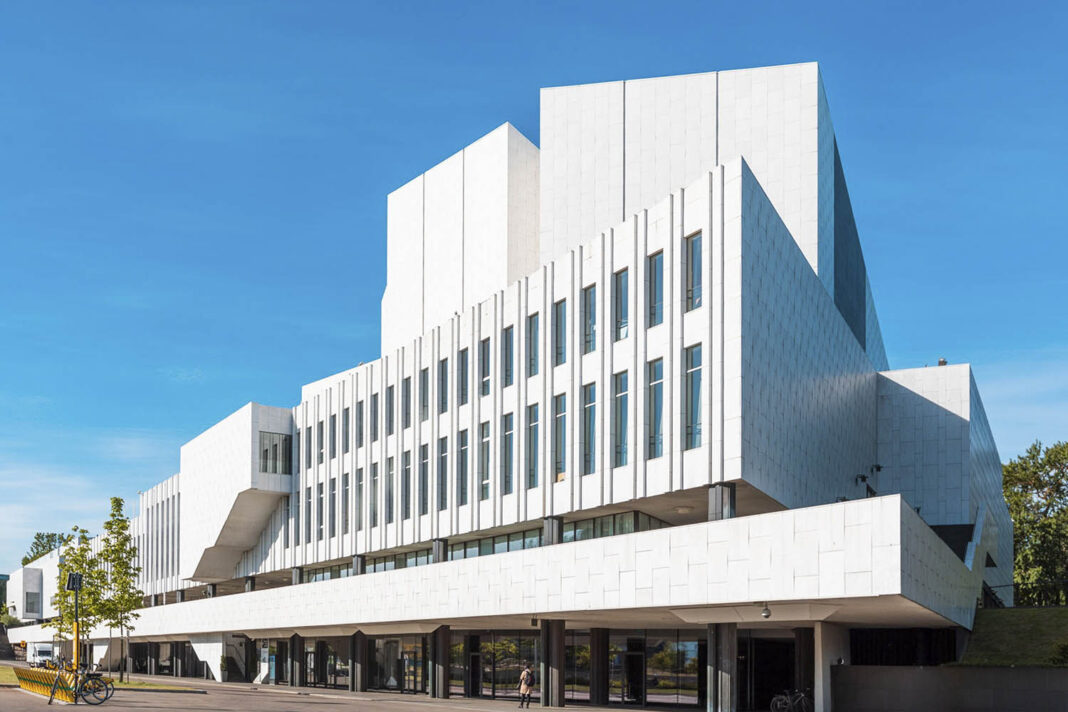
Finlandia Hall (1971) – White Marble, Big Dreams, and Leaky Facades
Of all Aalto’s buildings in Helsinki, Finlandia Hall is the most monumental—and, depending on who you ask, the most maddening. Clad in gleaming Italian marble, the concert and conference venue was meant to be Finland’s elegant calling card to the world. Unfortunately, the Finnish climate had other ideas. The marble began cracking almost immediately, and over the decades the façade has been replaced, patched, and cursed at more than once.
But step inside, and the story changes completely. The interiors, fully renovated between 2022 and 2024, are pure Aalto: warm, human, and surprisingly playful. Light floods through geometric skylights, the walls curve like riverbanks, and even the smallest fixtures—from coat hooks to handrails—have that distinct Aalto touch: functional, beautiful, and just a little bit quirky.
Originally, the building included apartments for on-site staff (because of course it did—this was Aalto, who thought of everything). Now, for the first time, two of those rooms have been converted into guest suites, allowing architecture fans the rare pleasure of sleeping inside an Aalto building—an experience somewhere between a design pilgrimage and a very elegant sleepover.
Finlandia Hall is Aalto’s grand gesture: part concert hall, part modernist sculpture, part noble marble experiment in a land of freezing drizzle. It may not be perfect, but it’s unforgettable—and very Aalto.
The House of Culture (Kulttuuritalo, 1958) – From Party Politics to Rock ’n’ Roll
Designed by Aalto for the Finnish Communist Party, Kulttuuritalo was meant to be a bold, brick-clad temple of culture and ideology—a place where the working class could gather, learn, and be uplifted by art and ideas. And to be fair, it delivered on that promise… just not quite the way the Party imagined.
Soon enough, electric guitars drowned out political speeches, and Kulttuuritalo found a second life as one of Helsinki’s most legendary music venues. The same stage that once hosted Marxist lectures welcomed Jimi Hendrix, Led Zeppelin, and Queen—a fact that would have either thrilled or horrified the original funders, depending on the decibel level.
Architecturally, Kulttuuritalo is classic Aalto: bold but human, with warm red brick and clever use of curves, light, and materials. Even the backstage areas were carefully considered—Aalto reportedly thought about how artists would move through the space, from dressing room to stage, long before the spotlight hit.
Today, it’s a cherished piece of living history: part music hall, part modernist masterpiece, and part very stylish political time capsule. Come for the architecture, stay for the acoustics—and if the walls could talk, they’d probably sing.
Kela Headquarters (1956) – Bureaucracy, But Make It Beautiful
At first glance, the Kela Headquarters looks like a fortress of red brick and state paperwork. And in a way, it is—this was, after all, designed to house Finland’s social insurance institution, the heart of national bureaucracy. But step inside, and Alvar Aalto’s intentions reveal themselves in full.
Aalto believed that even civil servants deserved beauty. He wanted to design a workspace where no one would lose their soul to forms and filing cabinets, and it shows. The interior unfolds in gentle curves, tactile surfaces, soft natural light, and thoughtful details that make even a workday feel, if not magical, then at least humane.
It’s a rare example of compassionate architecture—not flashy, but quietly radical in its mission to treat workers as people, not paper-pushers. Today, the building still serves its original purpose, and guided tours give architecture lovers the chance to peek behind its stoic façade.
If you’ve ever wondered what bureaucracy would look like in the hands of a modernist with a heart, this is your building.
Aalto House (1936) & Studio Aalto (1955) – Where Modernism Came Home
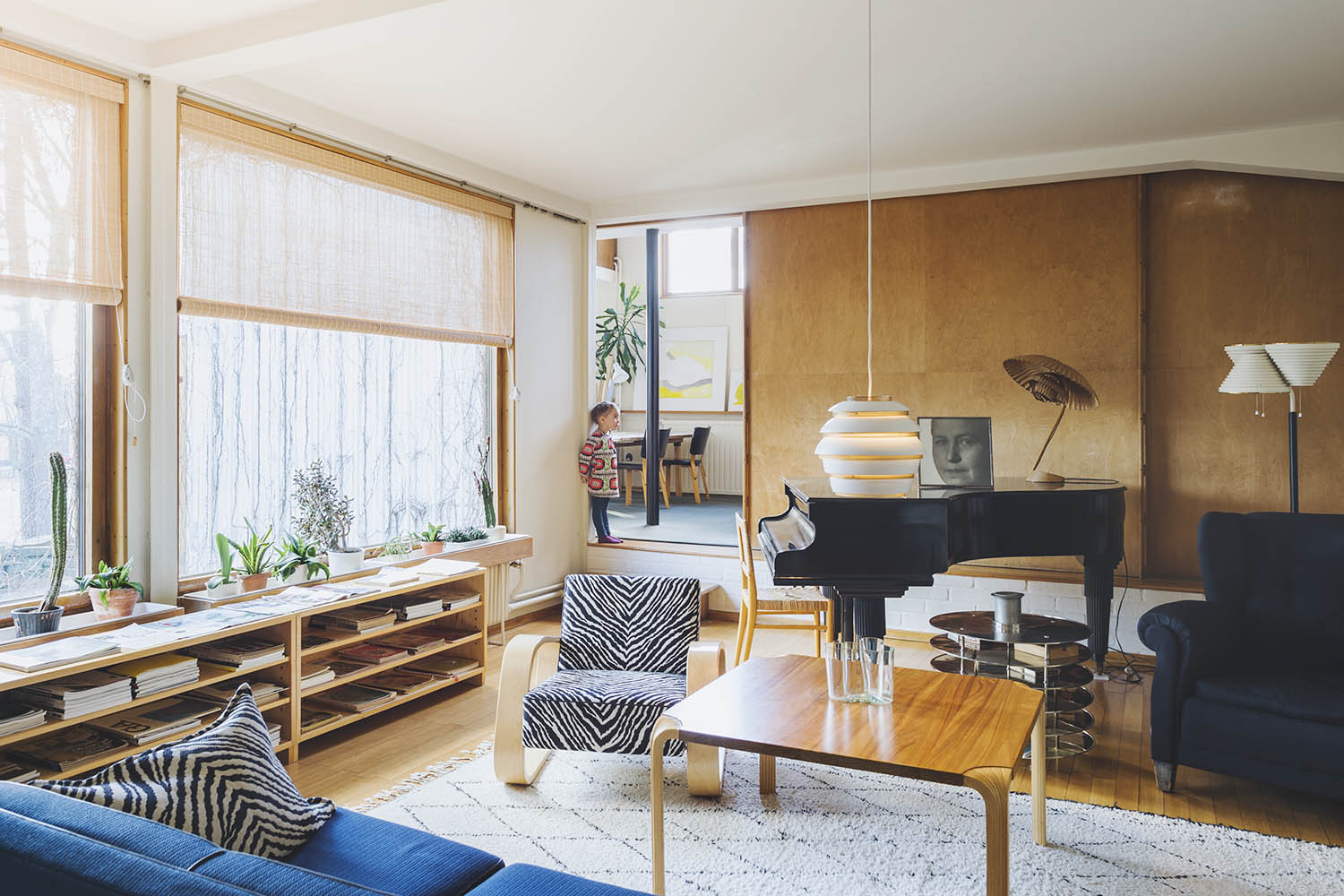
If you want to understand Alvar Aalto, skip the marble façades and grand halls—go to Munkkiniemi, where he actually lived, worked, argued, dreamed, and drew. Just a short stroll apart, the Aalto House and Studio Aalto offer the most personal and revealing glimpse into the architect’s world.
The Aalto House, built in 1936, was both a family home and the early base of his architectural office. It’s a far cry from cold, glassy modernism: here you’ll find brick, wood, handmade furniture, and sun-drenched nooks that make the house feel not only elegant but deeply human. It’s modernism in wool socks.
As his fame—and client list—grew, Aalto designed a dedicated studio nearby in 1955. The Studio is white and modernist, yes, but still full of warmth. Its curved walls, lofty light, and garden views show a man who believed that even workplaces should soothe the mind and inspire the eye.
Every corner of these buildings speaks of Aalto’s values: form serving function, beauty grounded in life, and a deep respect for natural materials. You can almost hear the clatter of coffee cups, the scratching of pencils on tracing paper, and the quiet buzz of ideas being born.
Guided tours (book in advance!) are the only way in—and they’re worth every step. This is Aalto without the marble or the myth—just the man, his work, and the world he built for himself.
Visiting Aalto’s Helsinki
Aalto’s sites in Helsinki can be visited by guided tours, which must be booked in advance. The city’s Aalto landmarks are part of a collective UNESCO World Heritage bid called “Aalto Works”, with a decision expected in summer 2026.
Tip: If you only see one, choose either Finlandia Hall for grand vision or the Aalto House for personal insight. But to truly understand the man behind Finland’s most famous buildings? You’ll want to step into all five.
Did you like this article? If you’re planning a trip to Finland, please book your hotel or rent a cabin or rental car by clicking on our affiliate links. We get a small commission, but you don’t pay any extra. Thanks for your support!